Important tool updates - Learn more
- Learn
-
Articles
Read about influencer marketing
-
Growthnotes - Newsletter
Insights for the modern marketer
As 2026 kicks off, the food and beverage world is being totally reimagined. Consumer habits are changing at warp speed, driven by tech innovation, rising sustainability expectations, and a growing demand for transparency.
People aren’t just buying food and drinks anymore, but they’re buying into the story behind them.
Yes, taste still matters, but now it’s all about values, impact, and authenticity.
Who made it? How was it sourced? What does it say about the person consuming it?
These questions shape buying decisions, making food and beverage marketing more critical than ever.
In this guide, we’ll tell you how to:
Because in today’s market, every bite (or sip) tells a story, and the brands that stand out are the authentic ones leaning into innovation. Flavor is just the beginning. Let’s help you make it meaningful.
Meet the 2026 food & drink shopper: more thoughtful than ever, and no longer just chasing flavor. They’re chasing meaning.
These days, food and beverages reflect wellness goals, eco‑values, and lifestyle habits shaped by consumer behavior trends.
But what’s driving this shift?
Australian wine brand 19 Crimes takes the cake here with AR packaging:
Then there are the food tribes, or the micro‑communities shaping the market.
From plant‑based athletes and keto‑curious pros, to clean‑label parents and sugar‑free snackers, each group expects messaging that gets them. A generic “one‑size‑fits‑all” campaign just won’t cut it if your target audience is diverse.
And where are these tribes hanging out?
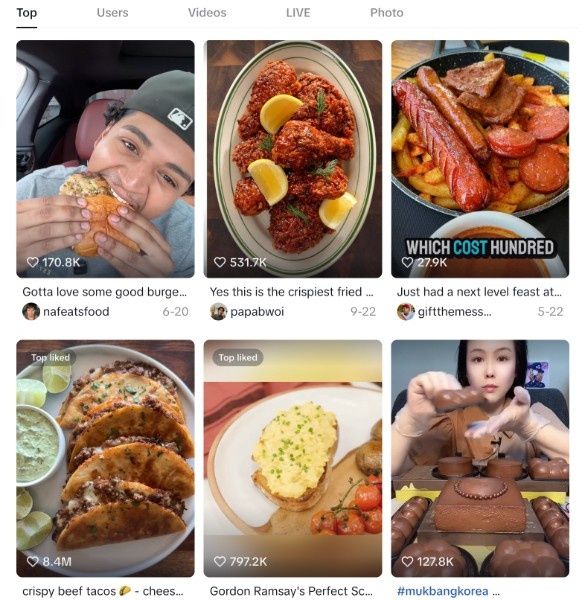
On social media. Platforms like TikTok, YouTube Shorts, and Instagram Reels aren’t just for fun anymore. They’re actually shaping what people eat, drink, and buy next. This means social media advertising and social media influencers are the keys to discovery.
For example, the #FoodTok tag has amassed over 174 billion views according to one industry take.
So what does that mean for brands?
You can’t just list product features anymore.
And here's a strategic move:
Use tools like SparkToro to identify the platforms, influencers, and hashtags your food tribe already follows. Layer this with behavioral data from Google Analytics and audience insights from Facebook Ads Manager to create campaigns that feel intuitively personal and perfectly timed.
The food and beverage market is changing, from how people discover new tastes to which brands they actually trust.
Whether you’re a growing snack brand, a rising beverage startup, or a well-established player gearing up for your next big move, smart marketing can help you stand out, stay memorable, and keep customers coming back for more.
To kick things off, here’s a quick look at eight food marketing strategies that are shaping the future of food and beverage in 2026:
In the fast-moving food & beverage world, good storytelling is a game-changer. When you tell the right story, your product stops being just “another snack” or “another drink”. It becomes an experience your audience wants to be part of, elevating your brand positioning.
Research shows that brands seen as authentic and relevant (key storytelling dimensions) are linked with stronger brand loyalty and retention.
Founder‑led storytelling: When the brand’s founder steps into the story, sharing the journey, the behind‑the‑scenes, and the why, you build trust and connection.
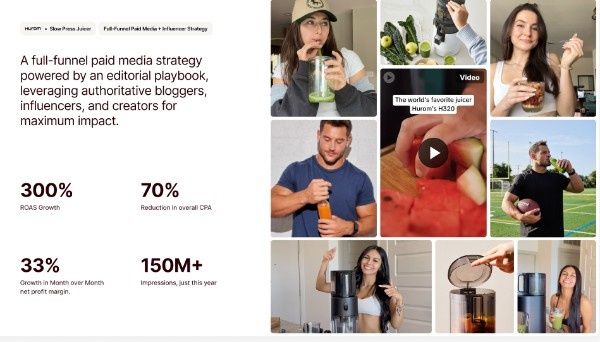
A great example of storytelling in action comes from Hurom, a global slow-juicer brand that partnered with our sister-agency inBeat a few years ago.
Instead of centering glossy product shots, Hurom leaned into process storytelling. Creators filmed the ritual of juicing itself: whole ingredients, the slow cold-press, the vibrant color of fresh juice hitting the glass.
This turned the product into a story about wellness, care, and daily ritual. Viewers weren’t just seeing a juicer, but seeing a lifestyle: “the morning reset”, “the nutrient-rich start”, “the calm, slow moment before the day begins.”
By spotlighting natural ingredients and the sensory elements of juicing, the brand conveys its commitment to wellness and mindful living without overstating the message.
It’s a powerful reminder that in the food and beverage industry, the story isn’t just your origin. It’s the way you show your product in motion.
Insider tip: Use sensory words. Talk about the “velvety cocoa‑rich melt”, the “sun‑warmed orange grove”, the “light fizz that lifts the palate”. Then pick one strong theme (e.g., “small‑batch, local sourcing”) and weave it across your website, packaging, email campaigns, and social channels, so your story is everywhere.
How to amplify it: Once your story is nailed, you’ve got to show up where people are. Think: your website’s hero banner, bite‑sized vertical videos on social, behind‑the‑scenes reels, and micro‑stories in emails. Don’t leave your story siloed. Make it the backbone of your whole marketing mix.
In today’s food & beverage world, your first impression doesn’t happen when someone takes a bite. It happens online. Your website, social media ads, search results, and e‑commerce checkout should all be gateways into flavor, trust, and experience.
A strong digital presence is how you turn taste into visibility, engagement, and conversion.
Standing out in search as a food or beverage brand means going beyond basic product listings. To truly capture attention, focus on:
Social media is where taste gets previewed, communities are built, and shareable moments happen.
To make the most of it:
Your website is more than a storefront. It’s a brand experience that needs to convert interest into action. Make sure it loads fast (ideally under 2 seconds), is mobile‑first, and visually rich.
Add “Buy Now” buttons, subscriptions (e.g., monthly snack box), loyalty perks, and very smooth checkout flows. Then use tools like GA4 and heat‑mapping (like Hotjar) to find where users drop off and fix it.
When SEO, social media, and e‑commerce are aligned, you become discoverable, relevant, and ready to convert. This kind of alignment helps customers flow naturally from discovering your brand to making a purchase.
By making your digital presence reflect flavor (through imagery and product stories), values (health, sustainability), and experience (smooth sign‑up, community), you’re setting your brand up for 2026 and beyond.
In 2026, it’s less about celeb shout‑outs and more about real connections. Brands that win are those building communities and tapping into creators who already resonate deeply with niche food tribes.
Here’s how to think about your creator mix:
Here are some formats that actually resonate:
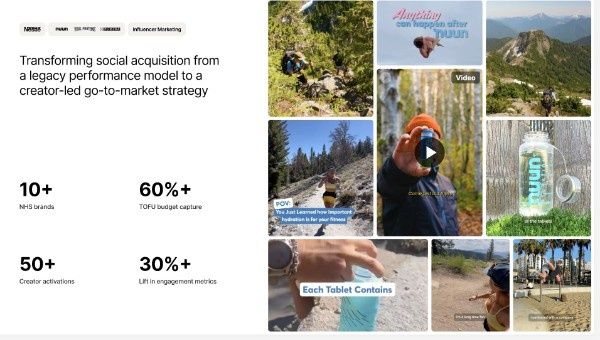
A strong example of community-driven influencer marketing comes from Nuun, Nestlé’s hydration brand. They partnered with our sister-agency, inBeat.
Instead of chasing celebrity partnerships, Nuun built an ecosystem of creators who were already part of niche fitness communities, like hikers, trail runners, outdoor athletes, and wellness enthusiasts.
These weren’t one-off posts. Our specialists at inBeat tapped into creators who live the lifestyle, producing content like:
This approach helped Nuun:
This worked because Nuun focused on creators who genuinely fit the lifestyle, making the content feel believable rather than promotional.
In a world ruled by screens, food and drink still live in the real world. Smell, taste, texture, and vibe matter. Brands that pull off memorable experiences move beyond being “just another product” and become moments people remember.
Here’s how to level up your experiential game across four major arenas:
Out‑of‑home and digital out‑of‑home media let your story show up in real, high‑traffic spaces.
Picture a beverage brand using digital canvases in bars or convenience stores. The eye‑catching visuals, QR codes, and even ambient scents. When done right, the space becomes immersive.
As a side note, we couldn’t help but notice how FIX Chocolate and Deliveroo are turning heads in Dubai and Abu Dhabi:
A three-meter chocolate bar at Marina Mall lets shoppers peel off real samples, then scan a code that instantly adds FIX to their Deliveroo basket.
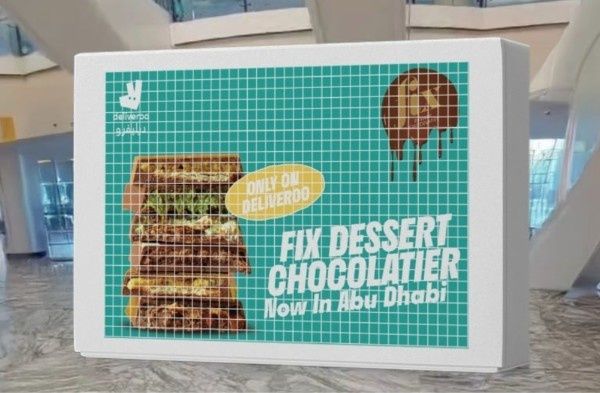
This playful, high-impact launch grabbed both crowds and press.
Insider tip: Reserve a “social‑share” spot near your display. A selfie zone, special lighting, or a fun frame can fuel full‑blown UGC and social shares.
Pop‑ups and mobile sampling get a fresh twist when you layer in AR or interactive storytelling.
Imagine a food truck tour where you taste a snack, scan the packaging, and instantly watch its “farm to fridge” journey in AR. Or a demo where your drink “opens” via smartphone animation, showing flavor profiles.
These activations drive engagement if you make the tech smooth and the incentive clear (taste, share, discount).
This is the sweet spot where physical meets digital.
Host an in‑store tasting event and live‑stream it. Have influencers on‑site and online. Let the people trying the new product tag your brand, share stories, and post reactions. Use QR codes at your stand, hashtags on packaging, etc.
This can transform your in‑store moment into a social and even community moment.
Here’s how to stretch your brand story past the booth.
Supply AR‑enabled packaging or labels that consumers scan at home and unlock immersive content like virtual tastings, ingredient origin tours, and flavor‑pairing games.
A yogurt brand might send a subscription box with AR labels and let users “visit” the farm virtually, for example.
But here’s another way to use this, inspired by Jack Daniels:
These moments carry your brand experience beyond just one interaction, inviting people to explore more and stay engaged longer.
Across all these experiences, one thing ties them together: shareability.
Every activation should ask: “Where will someone take a photo or video? What will be visible in that frame?”
Good lighting, distinct visuals, a bold backdrop, and clever packaging - they all matter.
These immersive experiences strengthen brand awareness, drive customer engagement, and support your broader digital marketing strategy through highly shareable content.
By 2026, “eco‑friendly” will be even more important. Today’s food and beverage consumers expect visible change, measurable impact, and brands that live their values. Here’s what you should focus on:
The global sustainable‑packaging market was worth around USD 272.9 billion in 2023 and is projected to hit roughly USD 448.5 billion by 2030.
In other words, packaging isn’t just part of your product.
It is a product.
When brands move to compostable, reusable, or PCR (post‑consumer recycled) materials and clearly label that, they’re speaking the language consumers now expect.
People want to know: “Where did it come from? How did it get here? What cost was paid by people or the planet?”
Publishing your carbon footprint, spotlighting regenerative‑farming partners, and showing year‑on‑year improvements build credibility.
The ask has gone from “Does it taste good?” to “Does it align with my values and my body?”
If you tie clean‑label ingredients, plant‑based credentials, or low‑sugar promises to your sourcing and packaging story, you hit the trifecta: taste + ethics + health.
Good Ranchers hits the nail on the head with a sustainability story that’s actually tangible. Their site spells it out clearly: pasture-raised American meat from local farms, no antibiotics or added hormones, humane treatment, and 100% wild-caught seafood sourced sustainably.
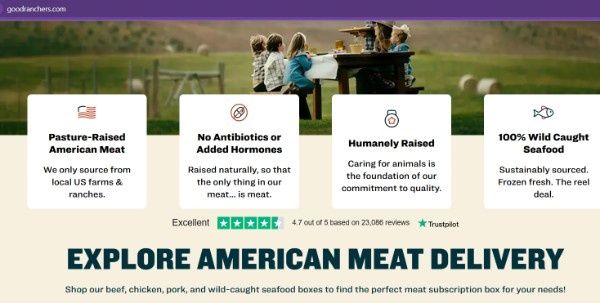
It’s transparent, values-driven, and exactly what modern consumers want to see.
Top tip: Avoid greenwashing.
Labeling something “eco” or “clean” isn’t enough, and can even backfire if the claims don’t match the action.
Credibility here is everything. For instance: publicly publish a metric like, “We cut virgin plastic usage by 20% in 2026 vs 2025,” or “Saved 1,000 kg CO₂e via our reusable‑bottle pilot.”
Then show how people can verify it. That transparency builds trust and differentiates you from the rest.
In the modern food and beverage space, you need AI, predictive analytics, and sharper first‑party data. That way, your 2026 marketing will feel like it’s made for your ICP: timely, relevant, and personal.
Brands are shifting from broad demographic buckets to micro‑segments driven by behavior and preference.
In fact, a 2025 review found that 73% of business leaders agree AI will fundamentally reshape personalization strategies, and 92% of businesses are already using AI‑driven personalization to boost growth.
This shift makes each interaction feel more relevant, helping customers find products that genuinely fit their preferences.
Privacy note: As you get more personal, you’ve got to be transparent. Consumers expect clarity on how their data is collected, used, and protected. A failure here can erode trust faster than any marketing misstep.
With ad costs climbing and competition getting fierce, focusing on keeping customers makes more sense than just hunting for new ones.
For instance, increasing customer retention by just 5% can lead to 25% to 95% higher profits.
In short, retention is a real growth lever.
Here are some killer tactics you can use to boost loyalty and deepen relationships:
Since the food and beverage space is packed with options, loyalty programs help you stay front‑of‑mind. They also encourage ongoing engagement by rewarding customers in meaningful ways.
Starbucks Rewards stands out because it’s unusually sticky: you earn Stars on every purchase, can redeem them fast for free drinks or food, and get personalized offers based on your habits.
The real differentiator, though, is the in-app experience. You can order ahead, customize everything, and pay through one seamless wallet.
Plus, retained customers cost less to serve, spend more on average, and are likelier to advocate for you. This results in better ROI all around.
In the F&B world, seasonal campaigns create urgency, and when tied to a strong marketing strategy, influencer marketing, and timely digital marketing, they boost visibility fast.
When a flavor is only around briefly, it becomes more desirable. Research shows that time‑limited offers tap into FOMO (fear of missing out) and create urgency, which are key drivers of purchase behavior.
Thus, your seasonal drops are more than promotions. They’re moments.
Here’s how to nail seasonal campaigns in 2026:
Align with cultural and social moments: Mint your flavor with calendar cues. Think “Summer Seltzer Burst”, Valentine’s dessert edition, Super Bowl snack packs. When your product rides the wave of a cultural moment, it rides visibility. Here’s an ad that our team created for Hurom:
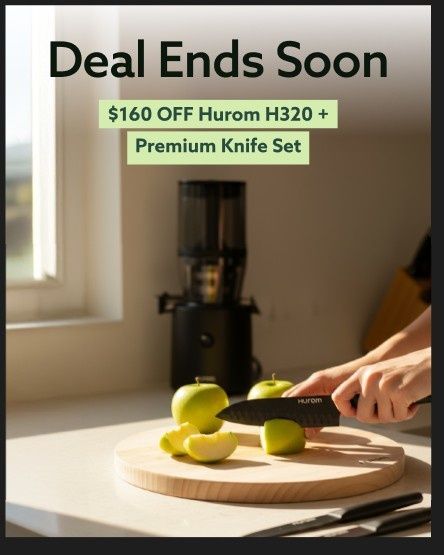
Pro tip: Use these free ad mockup generators to build and test multiple ad creatives fast. It’ll help you see the highest-performing paid ads, so you can double down on your investments/ optimizations there.
For F&B brands, limited-time offers are strategic spikes.
They’re powerful opportunities to spark interest and re-engage your audience at key moments throughout the year.
Just make sure your digital, in‑store, and social platforms are battle‑ready:
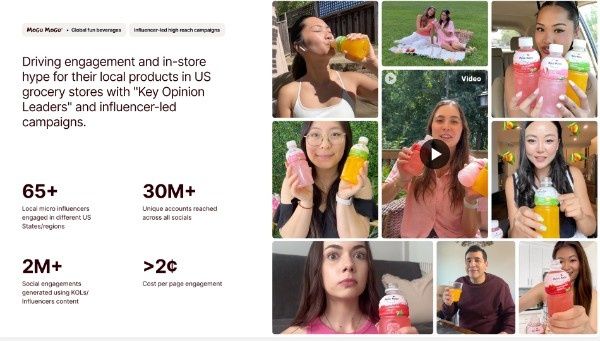
A strong example of seasonality done right comes from our client, Mogu Mogu, a global beverage brand that leaned into summer moments to spark buzz.
Instead of a standard campaign, we activated an influencer marketing campaign. Here, creators shot content during picnics, sunny park hangouts, and “first-sip” reactions that felt unmistakably seasonal.
The result?
The drink became a summer moment.
Creators framed it as the refreshing treat for hot days, the picnic companion, the “grab it while you can” vibe that fuels limited-time excitement. Their content built urgency, shareability, and trend energy across social feeds, just like seasonal drops are meant to do.
This playbook shows how tapping into cultural and seasonal cues can transform a product into a timely, social-ready event.
As we look ahead to 2026, trends like AR/VR, digital-native consumers, AI-powered discovery, and connected retail transform how food and beverage brands engage audiences. They support deeper personalization, better market trends forecasting, and more immersive experiences.
Below are the key emerging trends and technologies that are set to shape and strengthen F&B marketing in 2026:
What does this mean for your brand?
At this point, it’s clear. Food & beverage marketing in 2026 is about what your brand stands for.
You need to be delivering a story, a lifestyle, and a belief system to connect with your target audience.
The brands thriving in F&B are great at:
And what sets the leaders apart? They build systems where each interaction reinforces who they are and why they matter.
In 2026, the most successful food & beverage brands will fill conversations, communities, and hearts.
Ready to create marketing that actually feeds your future? Check out the free inBeat Marketing Toolkit today.
Or partner with inBeat Agency, your go-to team for influencer strategy, micro-creator partnerships, and performance-driven UGC built for food & beverage brands. Let’s grow your brand together.
Today’s shoppers want convenience, wellness, sustainability, and authenticity. They’re choosing brands that feel meaningful. Show them where your product comes from and why it exists.
Focus on local SEO, Google Ads, and short-form video on social. You need a seamless website experience to make online ordering as easy as possible. Share helpful content like recipes and behind-the-scenes clips, and make buying super easy with fast checkout and strong mobile UX.
Influencers help you tap into niche food tribes who trust their recommendations. Micro-creators, chefs, and loyal brand ambassadors create real, believable content that drives engagement and sales.
Go beyond discounts. Use gamified rewards, early access, seasonal drops, and personalized offers. When customers feel recognized and included, they keep coming back.