Important tool updates - Learn more
- Learn
-
Articles
Read about influencer marketing
-
Growthnotes - Newsletter
Insights for the modern marketer
By 2026, generative AI won’t just be a creative sidekick. It will play a central role in full-funnel automation across advertising, reshaping how digital marketing workflows run from planning to optimization.
Multimodal AI, predictive analytics, personalization, and conversational experiences are already changing how campaigns are built, launched, and improved across channels, without relying on cookies or third-party identifiers.
In this guide, we’ll explore how these shifts are influencing content creation, audience targeting, campaign management, and the governance frameworks needed to use AI responsibly.
You’ll also see how marketers are balancing automation with human input to protect brand safety, keep creative work authentic, and build long-term trust with audiences.
Let’s get into it.
Generative AI is redefining how digital ads come to life. And it’s not just changing what ads look like, but how the entire process works behind the scenes in modern marketing environments.
From generating creative assets to automating media planning, AI tools are reshaping the day-to-day work of agencies, ad buyers, and brands. Campaigns can now be built, tested, and optimized faster, supported by predictive algorithms that learn and adapt in real time.
This shift reduces manual effort across campaign management tasks and gives teams more room to focus on strategy, creative direction, and performance oversight.
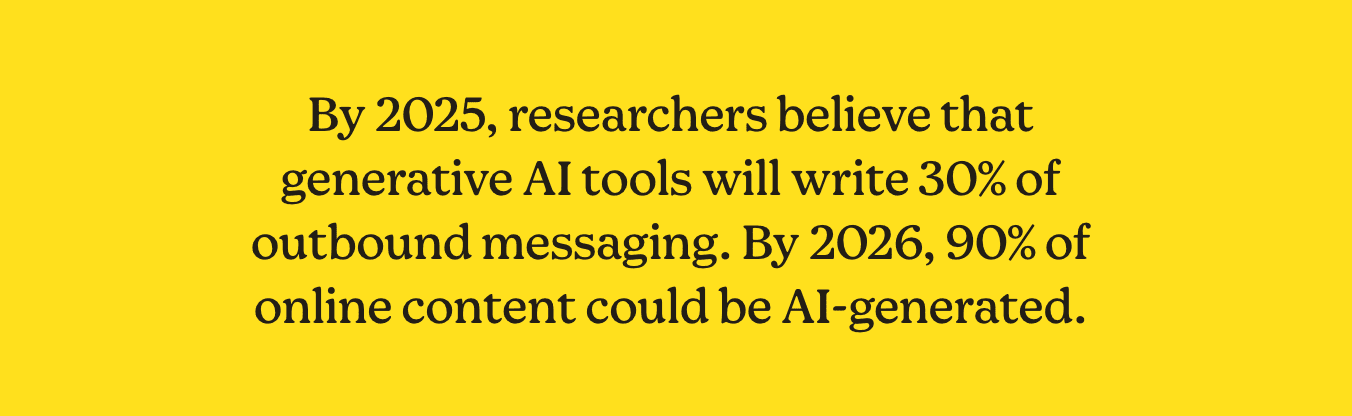
According to some sources, 90% of online content is likely to be AI-generated in 2026. From our point of view, that’s less likely to happen so soon; AI still needs lots of human oversight and editing.
But before diving deeper into applications, let’s define what generative AI actually is so we’re on the same page.
Generative AI is a type of artificial intelligence that creates new content by learning patterns from massive datasets using advanced machine learning models.
The pace of adoption is accelerating, with forecasts showing the generative AI market growing from $19.3 billion in 2024 to $215.03 billion by 2035.
Unlike traditional machine learning, which focuses on analyzing data or making predictions, generative AI produces original outputs. These outputs can be based on inputs like product details, audience demographics, behavioral signals, or simple text prompts, powered by Large Language Models (LLMs) and managed through infrastructure layers such as an AI Gateway that streamlines model access, routing, and security.
In advertising, this capability supports multiple stages of execution and optimization across digital marketing workflows:
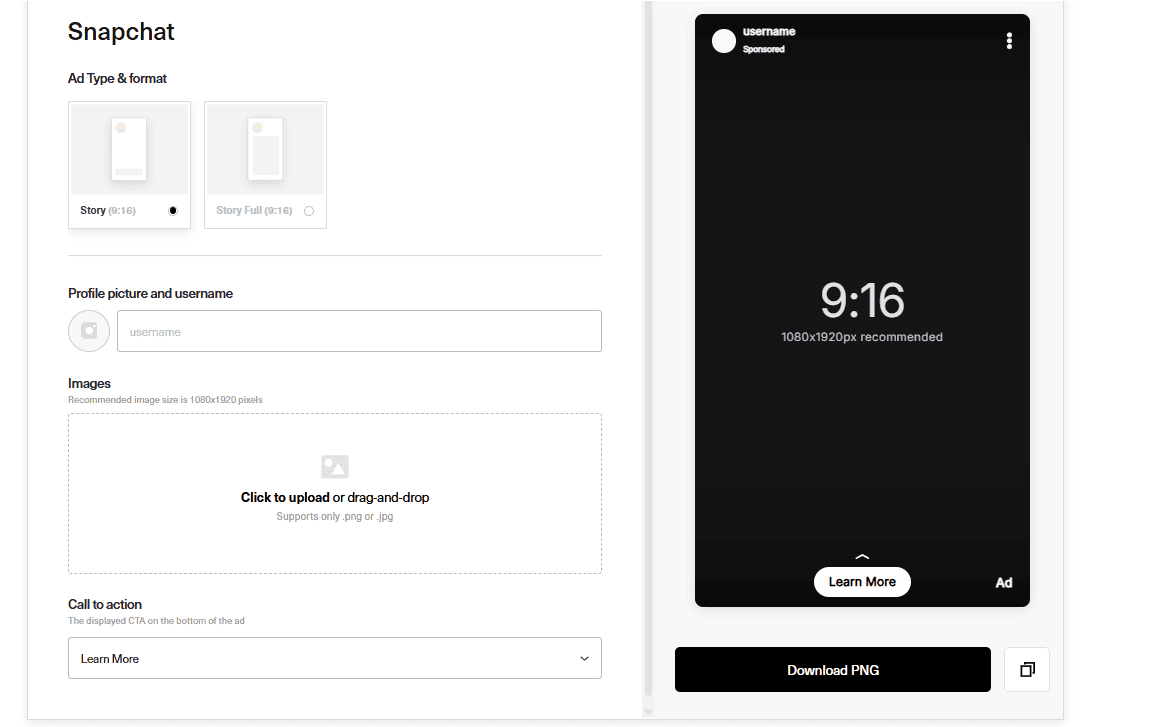
Side note: If you’re interested in creating and testing ad creatives fast, use our free ad mockup generators. All you need to do is pick the ad type and format, and add some details, like your CTA and visual before you download the results. Here’s what the Snapchat mockup generator looks like:
Most of this is powered by Large Language Models (LLMs) like GPT or Claude, which can be plugged right into martech stacks to boost efficiency across the funnel.
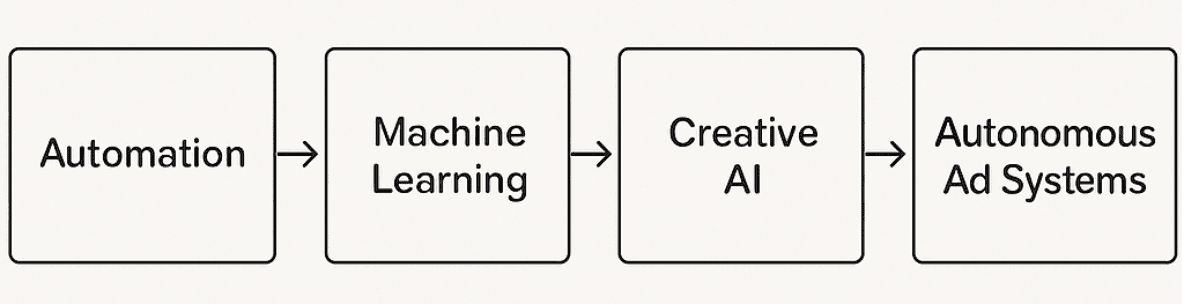
The move toward generative AI-powered advertising in 2026 didn’t happen overnight. It’s been a gradual evolution shaped by advances in digital marketing technology and AI tools:
This progression set the foundation for how generative AI is used in advertising today.
As generative AI becomes a core part of digital marketing, advertisers are finding practical ways to speed up production, personalize messaging, and automate optimization without losing control.
Whether it’s improving creative output, predicting audience behavior, or supporting interactive experiences, these tools are reshaping how campaigns are planned, launched, and managed across the funnel.
Generative AI is transforming creative workflows, making it faster and easier to produce assets, test ideas, and scale content across channels.
Advertisers are increasingly using tools like Jasper AI for copywriting and long-form content, alongside platforms such as Midjourney, DALL·E, and Runway for images, audio, and AI-assisted video.
The result? What once required a full team can now start with a prompt or product feed. This cuts production time and costs, supports digital video creation, and makes it easier to launch video ads across social platforms and connected TV.

Generative AI makes it simple to spin up large volumes of creative options, from headlines and images to formats and offers. Marketers can test what resonates before committing significant ad spend.
Tools like AdCreative.ai help teams generate multiple ad variations quickly, supporting faster testing, reducing risk, and limiting budget waste on underperforming concepts.
AI isn’t here to replace creative teams but to supercharge them. It handles the heavy lifting in asset production while people stay focused on brand voice, messaging, and strategy.
This combination keeps creative direction strong while increasing speed and output. Many social advertisers report that AI significantly reduces manual work, freeing up time so they can focus on more strategic or creative aspects of their roles.
As customer expectations rise, generative AI helps advertisers deliver spot-on, context-aware experiences without relying on invasive tracking. By combining first-party data, zero-party data, and contextual signals, brands can personalize at scale while staying aligned with privacy expectations.
Generative AI works alongside predictive analytics to forecast likely actions such as clicks, conversions, churn risk, lifetime value, and product recommendations. This allows marketers to tailor messaging and offers to users who are most likely to respond.
In fact, 71% of high‑performing companies already use predictive analytics in marketing, showing it’s not just theory but a real competitive advantage.
From a budget perspective, this also helps teams allocate ad spend more efficiently by focusing on higher-value segments and reducing waste across lower-performing audiences.
Modern DCO platforms now assemble ads in real time using contextual relevance, behavioral signals, and content rules. Creative elements like headlines, visuals, and calls to action are dynamically selected based on user context.
Instead of serving one generic ad, each person sees a version that better reflects their interests. In our experience, this improves engagement across channels such as social media marketing, display, and video.
And it’s not just us saying this.
Some reports suggesting DCO can improve ad performance by up to ~35% compared to static ads
With cookies fading out and privacy rules tightening, generative AI offers a more privacy-safe approach to targeting.
By combining first-party data, contextual signals, and machine learning, brands can still deliver relevant ads without relying on invasive tracking. That way, you can support both performance and user trust.
Generative AI plays a major role beyond content creation by reducing the manual work involved in campaign management and optimization.
AI tools can monitor campaign metrics like clicks and conversions in real time, automatically adjusting budgets, bids, and audience targeting based on performance. This means faster responses to shifts without constant manual intervention.
Here’s what that looks like:
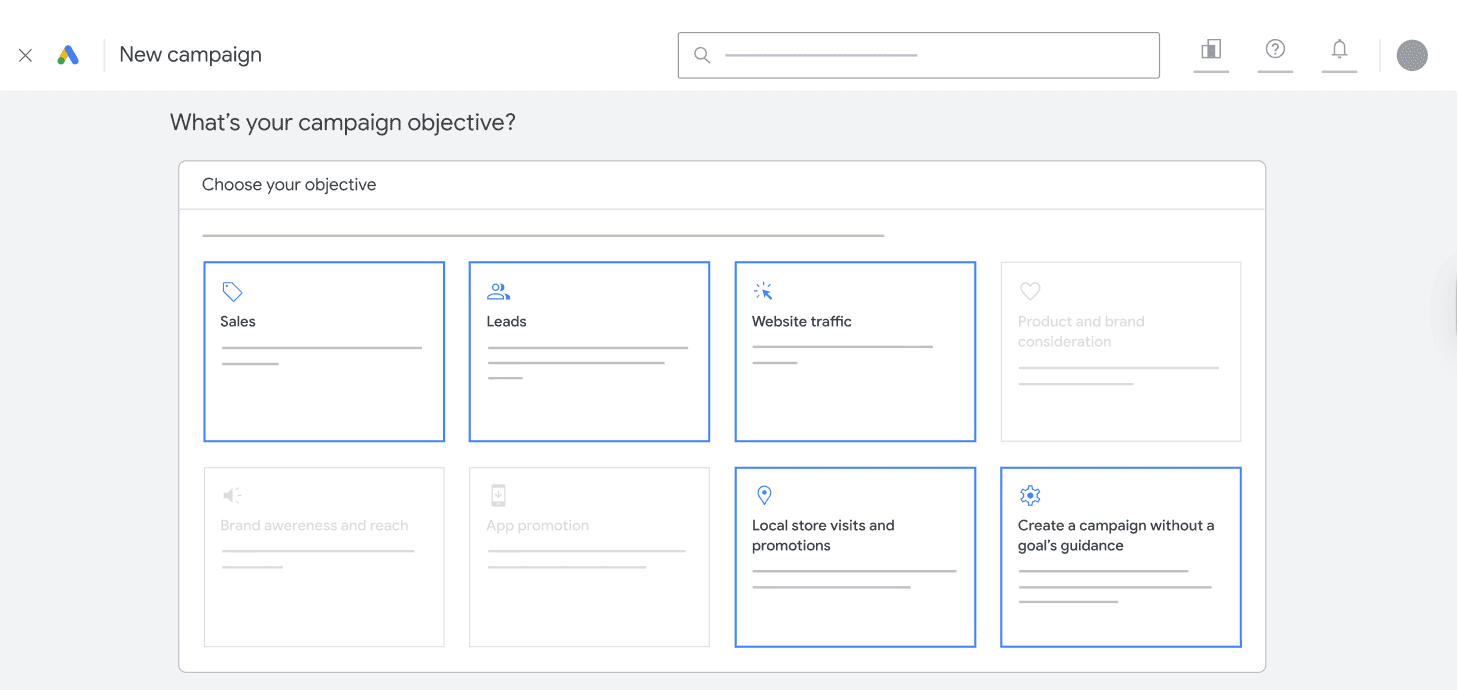
When combined with DCO, generative AI supports automated A/B and multivariate testing. Systems rotate creative versions, track results, and replace underperforming assets automatically, keeping campaigns fresh over longer periods.
For example, in a joint campaign, Netflix and Adidas used an AI marketing platform to deliver dynamic creative optimization across digital ad channels. The system analyzed user behavior, purchase history, and contextual cues (like time of day) to serve personalized ad creatives for the “Stranger Things x Adidas” collection.
Here’s one of their ads:
Modern AI platforms now pull content creation, targeting, and optimization together across search, social, display, and video. They also centralize reporting and predictions into one dashboard, giving teams a clear view of how things are going.
One of the most game-changing trends heading into 2026 is AI-powered ad experiences that talk back and interact with users in real time.
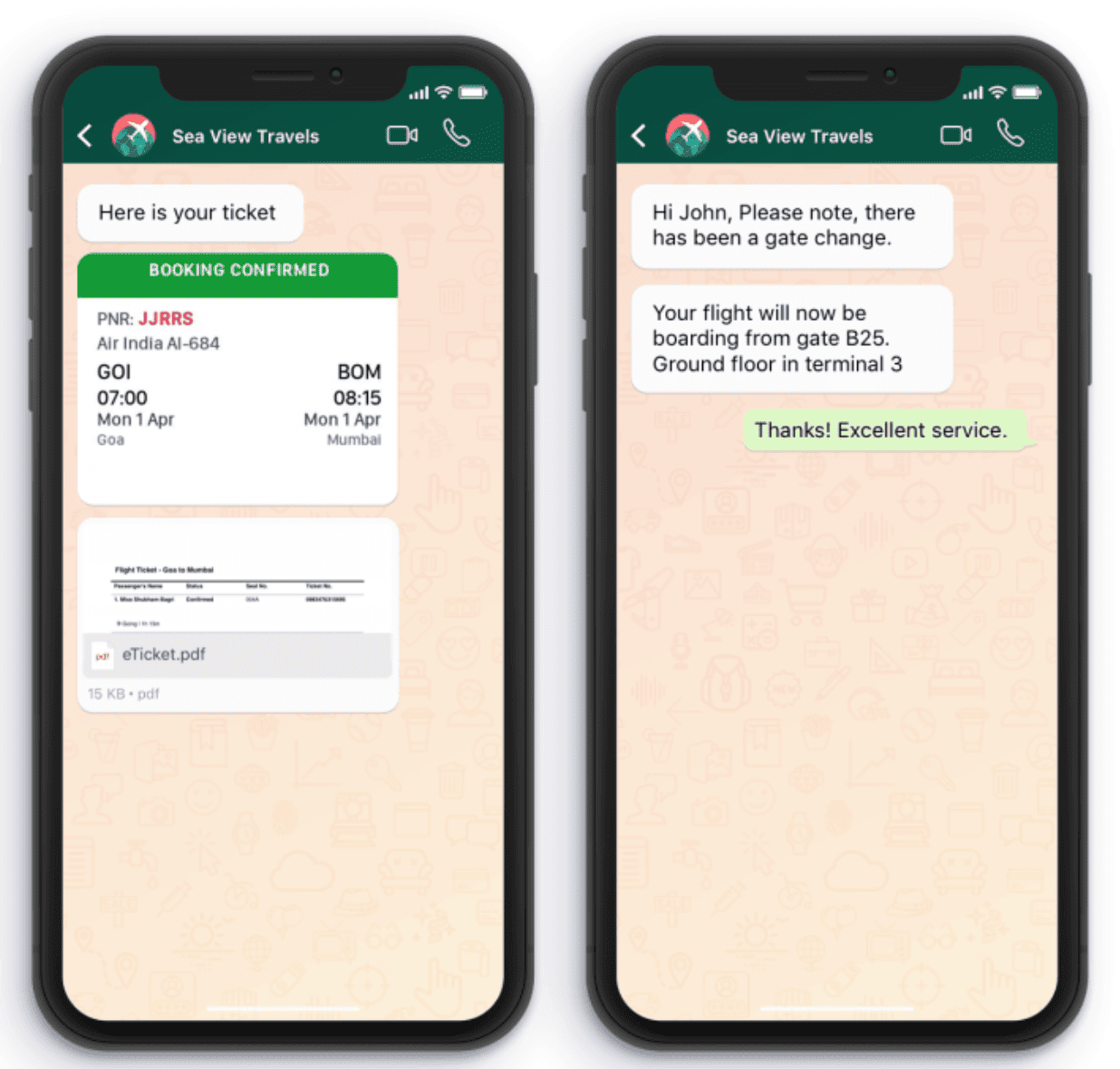
We noticed that many brands are starting to add AI chat interfaces right inside their ads or right after a click. These AI agents can answer questions, qualify leads, and help guide shoppers. Even better, they blend advertising, customer support, and sales into one smooth flow.
Early implementations appeared through platforms like WhatsApp Business, which let brands to move post-click interactions into messaging environments, like so:
With multimodal AI, ads can respond to voice commands, text, or gestures. These assistant-like experiences adapt to user behavior, whether that means suggesting products, previewing content, or adjusting creative elements on the fly.
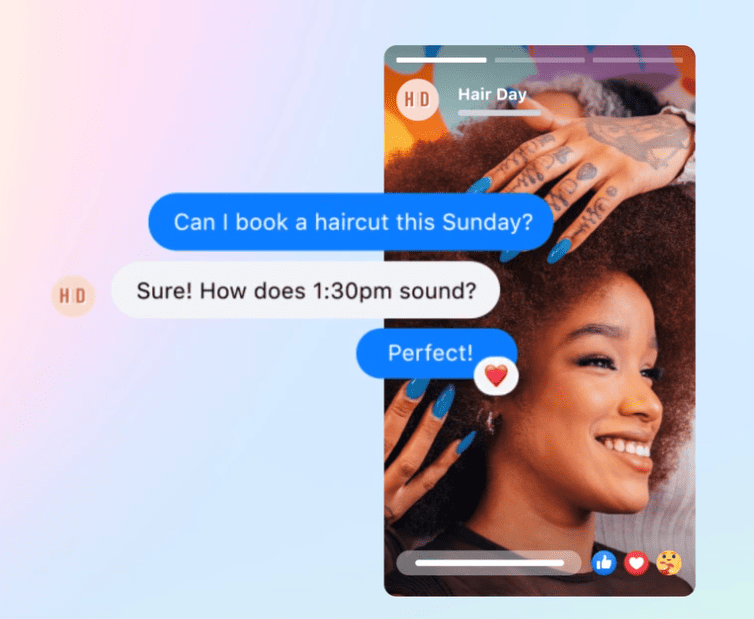
Interactive formats like chat-to-buy, ask-the-ad, or story-driven ads let users actively engage instead of just watching. They often lead to better engagement and conversion rates compared to traditional static formats, especially in early tests.
Here’s a good click-to-chat ad example on Facebook:
Used right, generative AI offers way more than just speed or novelty. It can change the way businesses operate, from slashing costs to improving decision-making. We’ve personally seen Gen AI give both big and small teams a serious edge in today’s competitive ad space through:
One of the biggest benefits is time and budget savings. Generative AI lets you produce content faster with fewer resources. Research suggests that AI use in marketing can increase productivity by around 40%.
Instead of waiting days for creative delivery, you can generate drafts and variations in minutes using AI tools. That means faster launches, quicker pivots, and a lot less lag time.
Generative AI also supports better decision-making. When paired with behavioral insights and predictive analytics, you can tailor creative and messaging based on real customer patterns.
This leads to more relevant content, stronger targeting, and smarter optimization. The payoff is stronger engagement, higher conversion rates (in some cases up to 50-100%), and fewer wasted impressions on the wrong audiences.
Generative AI levels the playing field. Smaller businesses without large budgets or creative teams can now access tools once reserved for major brands.
From dynamic content generation to advanced personalization, this is a game-changer as lean teams can deliver strong results and scale more effectively.
Generative AI brings serious advantages, but it’s not without risks. From fact-checking to brand integrity and ethical concerns, we advise marketers to stay sharp to avoid the pitfalls that can come with scaling AI in their ad strategies.
Scaling generative AI successfully means building smart systems, adjusting workflows, and maintaining a balance between automation and human creativity.
To scale AI responsibly, we advise you to treat it like any other core business system. Clear policies, checks, and accountability must be baked in from the start.
With solid governance in place, generative AI shifts from a risky experiment to a scalable asset. This way, you’ll grow without compromising quality or control.
Scaling AI successfully is a tech shift, yes, but more importantly, it’s a people and process shift. That means rethinking how teams work and equipping them with the skills to thrive in an AI-powered environment.
Scale in phases: Don’t try to do it all at once. Research around the AI Collaboration Maturity Model shows that teams typically move from scattered, one-off AI use to fully integrated workflows over time. Here’s what this model entails:
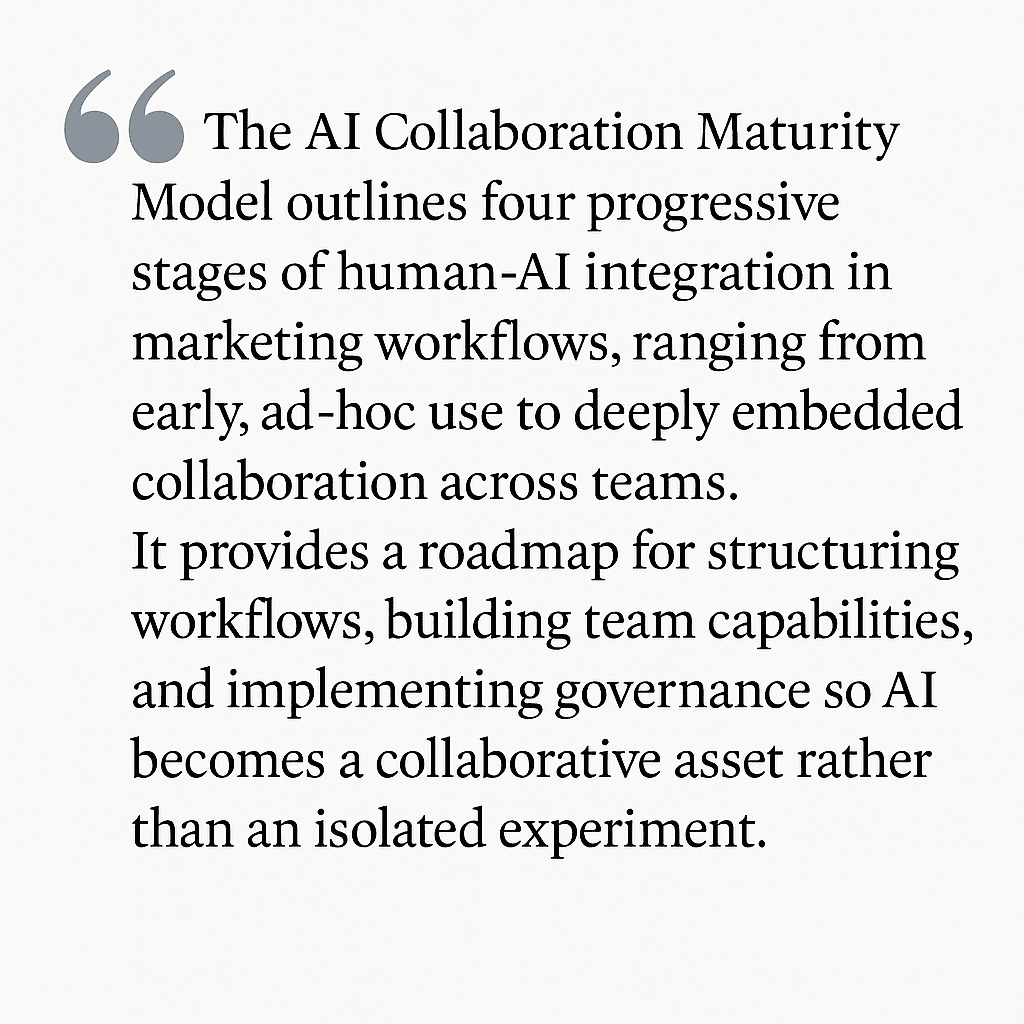
When brands invest in team readiness and phased integration, the shift to generative AI tends to go more smoothly and deliver stronger long-term returns.
Even as AI takes on more of the heavy lifting, human input is still key. This is especially true when it comes to creativity, authenticity, and brand voice. The best results happen when humans and AI work together.
This kind of collaboration helps brands stay true to who they are, while still gaining the speed, scale, and efficiency that generative AI brings to the table.
Generative AI is already changing how brands produce content, reach the right audiences, and optimize performance at scale. And the teams seeing real impact are the ones with clear systems in place: defined workflows, strong governance, and human oversight that keeps creativity and brand integrity intact.
For marketers looking to take a practical first step, inBeat Agency offers a useful starting point.
We help you apply AI-driven and data-led thinking to influencer discovery, content evaluation, and campaign planning, areas where speed, testing, and relevance have the biggest impact.
Get in touch today and let’s implement Gen AI in your campaign together!
By 2026, generative AI will be doing much more than helping write ads or generate visuals. It will support the entire campaign lifecycle, from creating assets like personalizing ads in real time to managing performance across channels. The big shift is speed: less manual work, faster decisions, and campaigns that adapt as they run.
Not at all. Generative AI works best as a support system for creative teams, not a substitute. People still shape the brand voice, ideas, and strategy, while AI helps with execution, testing, and scaling. When humans stay in control, and AI handles the busywork, the creative output is usually stronger.
As cookies fade out, generative AI gives advertisers another way forward. It uses first-party data, context, and patterns in behavior to keep ads relevant without relying on invasive tracking. That means brands can personalize responsibly while staying aligned with privacy expectations and regulations.
Before rolling AI out at scale, it’s important to put some structure in place. That includes clear guidelines on how AI is used, defined review steps, and people responsible for oversight. These guardrails help protect brand quality and trust as automation becomes more central to advertising.