Important tool updates - Learn more
- Learn
-
Articles
Read about influencer marketing
-
Growthnotes - Newsletter
Insights for the modern marketer
For Big Tech companies, artificial intelligence (AI) has become an important part of how ads are planned, delivered, and scaled. Platforms like Google, Meta, Amazon, Netflix, and Spotify use AI tools and machine learning to handle targeting, make creative decisions, and boost real-time performance. This approach sets the gold standard for AI marketing today.
And AI is rapidly becoming the norm across the industry.
Nearly half of advertisers (46%) plan to use AI to shape their media strategies in 2025, with similar shares using it for bidding and optimization. This shows that even beyond Big Tech, AI now underpins key advertising decisions.
But for most advertisers, the goal isn’t to recreate these massive systems.
It’s about understanding how AI is applied, scaled, and governed in the real world, especially within modern digital marketing strategies.
The real value lies in seeing how automation, data, and intelligence come together to build smarter marketing campaigns, elevate the customer experience, and streamline content creation.
We’re here to help.
This article breaks down nine key lessons from Big Tech’s approach to AI-driven marketing and how you can start applying them to your own digital and content strategy. Let’s dive in.
At inBeat Agency, we work with brands to apply these same AI-driven principles in real-world campaigns. From AI-assisted media buying and creator-driven performance ads to smarter testing and optimization frameworks, we help teams streamline execution without losing strategic control. Get in touch today and let’s optimize your campaign!
For Big Tech platforms, AI is what makes large-scale advertising workable in the first place. With millions of users, channels, and touchpoints in play, AI allows advertising systems to run continuously, adapt in real time, and stay aligned with both performance and user experience.
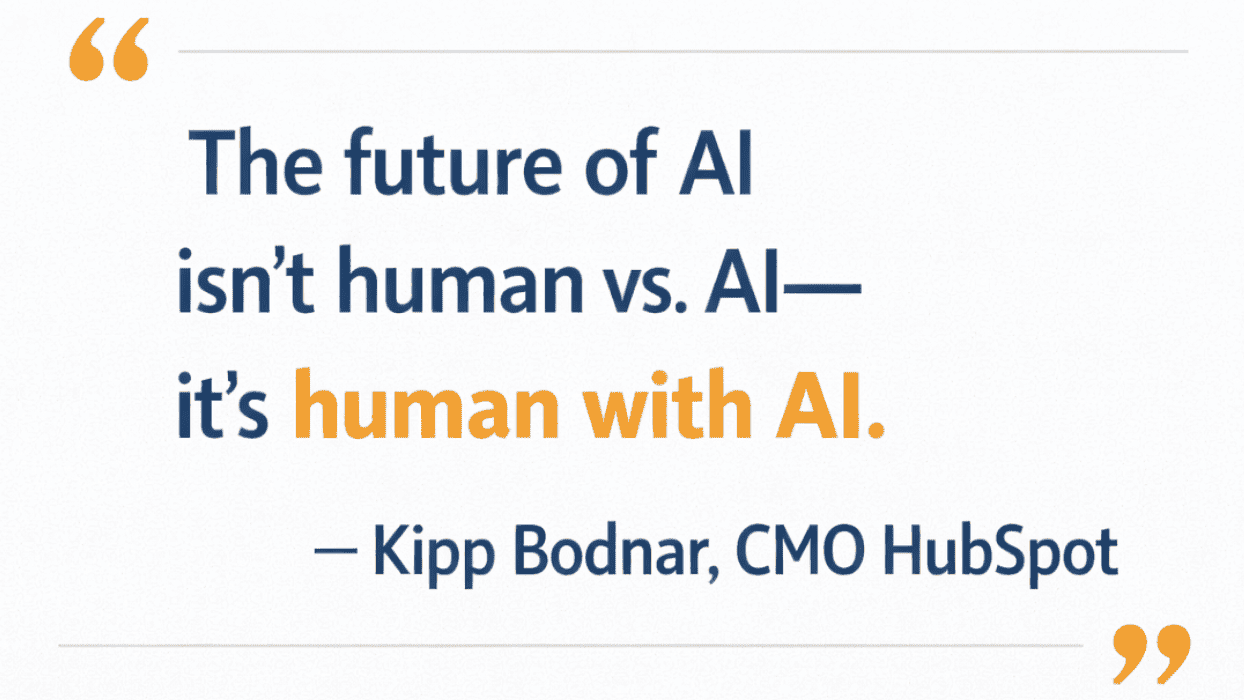
As Kipp Bodnar, CMO at HubSpot, says:
In fact, 86% of digital video advertisers are already using or planning to use generative AI to build video ad creative, according to TV Tech. Besides, AI-powered ads are projected to make up around 40% of all video ads by 2026. This shows just how central AI has become to marketing workflows.
In fact, AI helps Big Tech advertising run at scale. It brings together data, automation, and real-time decision-making so campaigns can adapt instantly, stay efficient, and remain aligned with user experience.
Below, we’ll discuss how this works in practice and why these capabilities matter.
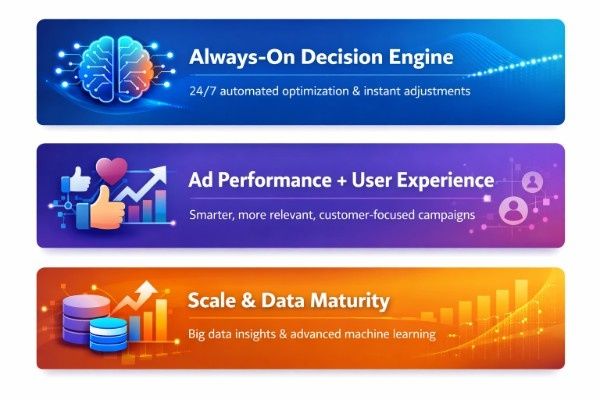
1. AI acts as an always-on decision engine: AI works quietly in the background 24/7, using predictive analytics to read signals and make split-second decisions. It automatically adjusts bids, placements, and messaging without waiting for manual updates or delayed optimization cycles.
2. It connects ad performance with user experience: AI interprets customer behavior, intent signals, and preferences across the entire customer journey. This makes ads more relevant and timely, improves engagement, and boosts conversion rates while supporting a better overall user experience.
3. It thrives on scale and data maturity: The more data AI has, the smarter it becomes. Big Tech benefits from massive datasets and advanced machine learning, but smaller teams can still unlock value by using the right marketing tools and high-quality signals within their campaigns.
Now that the foundation is clear, let’s explore nine practical ways you can apply Big Tech AI strategies to your own AI marketing approach, turning insights into smarter, more scalable marketing campaigns.
Big Tech relies on artificial intelligence and machine learning to fine‑tune targeting, creative choices, and ad delivery in real time. This turns advertising into a continuously learning system that improves with every interaction, using data and automation to refine overall performance.
Netflix is often spotlighted as a top-tier example of AI-powered personalization in action. We like its approach because artificial intelligence is deliberately used to create experiences that feel relevant, intuitive, and easy to navigate.
Netflix uses AI tools and machine learning across nearly every touchpoint of the customer experience. These systems decide which titles show up, in what order, and even which thumbnail is displayed, all tailored to each viewer. It’s all informed by real customer behaviors, viewing trends, and behavioral data, building a customized journey that adapts over time.
Here’s a good example based on your watch history:

Netflix uses personalization because it wants to be relevant. Netflix uses customer preferences and intent signals to make sure the right content surfaces without clutter. This smart balance enhances the customer journey because it makes discovery feel smooth and personal.
You can take a page from Netflix by using AI marketing tools to adjust ad messaging and creative based on where a user is in your funnel. We recommend fewer, but more intentional creative variations to increase engagement, align with target audience intent, and lift conversion rate across your marketing campaigns.
You can also create AI personas that learn from how real users interact with your brand and update themselves accordingly.
We've also seen many teams apply AI strategically in ABM campaigns, using data to prioritize target accounts and tailor messaging without overextending resources.
We recommend a gradual, test-and-learn approach to adopt AI while maintaining control over content quality and budget.
From our experience, too much personalization can backfire as it might feel invasive or repetitive. Netflix shows that AI in advertising works best when it enhances persuasion and leads to action. The key is using artificial intelligence to elevate customer experience, not to control it.
Spotify doesn’t just respond to what listeners have already done. It predicts what they’ll want next. That forward-thinking edge is what makes predictive analytics such a powerful force in AI-driven marketing and digital advertising performance.
Spotify uses artificial intelligence and machine learning to forecast listening habits, content preferences, and engagement patterns. By analyzing skips, saves, session timing, and repeat plays, Spotify surfaces emerging trends in customer behaviors even before users act on them.
Spotify also uses predictive models in its advertising workflows to estimate how different campaigns will perform and adjust ad delivery and bidding strategies accordingly.
For example, in a 2023 article, Spotify explains how machine learning models trained on historical campaign data can predict which ads will deliver better cost efficiency (e.g., lower cost per registration or subscription). This helps brands using Spotify to optimize spend and outcomes in real time.
Here’s their end-to-end architecture:
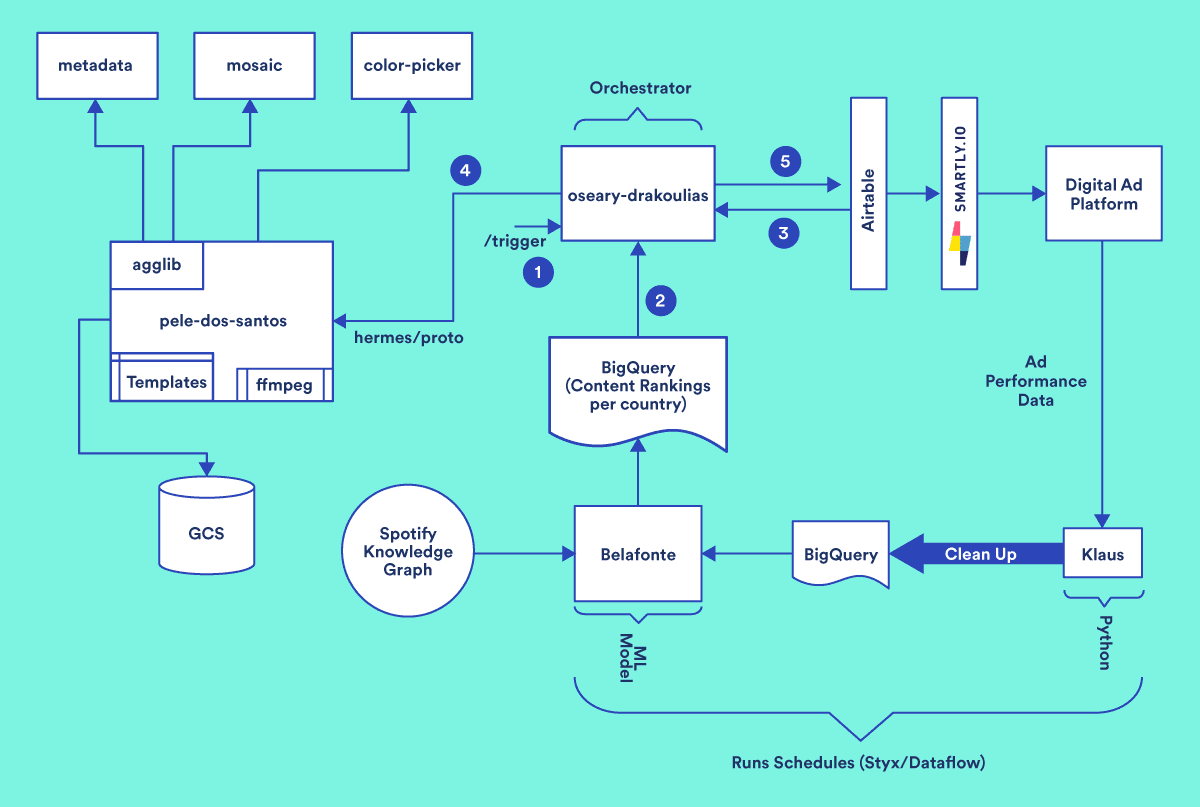
This predictive intelligence shapes everything from playlist curation to ad placement, so content feels relevant at every stage of the customer journey.
A real example of this is Spotify’s use of predictive modeling in its ad systems, where models forecast campaign performance and reduce costs compared to heuristic approaches, resulting in measurable efficiency gains.
Spotify goes beyond personalization. It anticipates. While personalization reacts to behavior, predictive analytics forecasts it, enabling smarter, earlier decisions in the journey.
Spotify engineers have publicly documented how they use machine-learning models to predict advertising performance outcomes before campaigns are deployed at scale. In the 2023 article cited above, they explain:
“We transformed this question into a supervised ML problem, where features of each artist were used to predict the share of registrations… Each day, the model trained with historical data and predicted key campaign performance metrics.” (Spotify, How We Automated Content Marketing to Acquire Users at Scale, 2023)
We encourage you to apply the same principle by using AI tools to predict conversion rate, engagement likelihood, and customer value. This supports more strategic marketing campaigns, better content creation and generation, and smarter budget allocation based on what’s likely to happen next.
To see how predictive modeling works in practice, independent researchers and data scientists usually build simplified models using public datasets. One example we liked is this machine-learning project built on Spotify’s public audio features:
If the data behind predictions is weak or misinterpreted, results can misfire. Artificial intelligence works best when it guides, not replaces, human judgment in your marketing strategies.
If you want to apply predictive thinking without building custom models, the inBeat.co free toolkit includes practical marketing calculators for metrics like ROAS, CTR, and conversion rate. These tools help you model outcomes, pressure-test assumptions, and plan budgets based on expected performance.
In Big Tech advertising, media buying isn’t done manually or with fixed rules. It’s fully automated, in many cases driven by artificial intelligence systems that make thousands of decisions every second. This approach boosts efficiency and performance across large‑scale marketing campaigns.
Big Tech platforms use AI tools, machine learning, and advanced automation to handle bidding, ad placement, and real‑time optimization across programmatic environments. These systems assess signals like user context, intent, timing, and past performance to decide which ads run, how much to bid, and how budgets should shift in real time.
For example, Google Ads Smart Bidding makes these decisions in milliseconds during each auction, operating at a speed and scale no human team could realistically match.
The main idea is speed at scale. Automation lets campaigns evolve on the fly using real‑time data, instead of waiting for manual changes. Predictive analytics and automation work together as an optimization engine that constantly adapts to changing conditions.
You can adopt automation tools to handle execution, but we advise you to reserve human effort for strategy, creative direction, and broader business goals. The best results come when automation operates within clear objectives, defined success metrics, and guardrails that tie back to overall marketing strategies.
We’ve noticed that automation starts to break down when it’s treated like a black box. When teams set it up once and walk away, performance can drift in subtle ways that aren’t immediately visible in dashboards.
In our experience, the biggest risk comes from unclear success signals. Automated systems optimize exactly for what they’re given. If those inputs don’t reflect real business priorities, campaigns can become efficient on paper while quietly underperforming where it actually matters.
We also advise teams to watch for misaligned incentives early. It’s easy to chase short-term gains like lower cost per action and miss longer-term effects on quality, retention, or brand impact. Without regular review, automation can reinforce these tradeoffs instead of correcting them.
The teams that get the most value from automation treat it as an ongoing system. They review outcomes, adjust objectives, and intervene when results start to diverge from strategy. AI handles execution at speed, while humans stay responsible for direction and course correction.
As data regulations tighten and user expectations shift, Big Tech now treats privacy as a core part of advertising. Artificial intelligence keeps ads relevant while protecting trust and the overall customer experience.
Big Tech platforms are moving beyond third-party cookies and invasive tracking. Instead, they rely on machine learning, first-party data, and contextual signals to deliver relevant ads while respecting user privacy. These privacy-safe methods power effective AI marketing without compromising individual identities.
Rather than depending primarily on cross-site identifiers, AI models analyze consented behavioral signals and contextual information to infer intent and serve personalized experiences at scale.
For example, Google Ads uses AI tools to evaluate context and first-party signals, allowing messaging to feel personal without exposing individual user identities to advertisers.
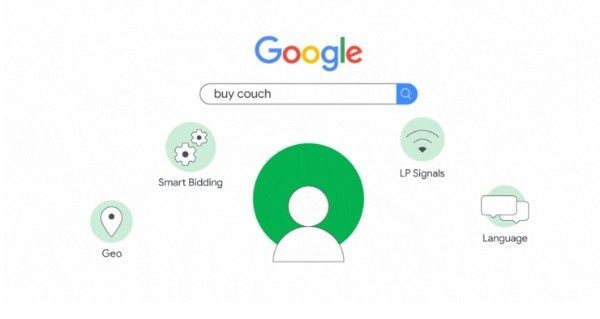
This approach is rooted in privacy by design. Instead of collecting more data, platforms extract deeper insights from smaller, consented datasets. AI enables personalization by detecting patterns, not by monitoring individuals.
You can apply these ideas by focusing on consented, first-party data, using contextual targeting, and respecting privacy signals. Use AI marketing tools wisely to create personalized experiences based on audience segments. The point is to create marketing campaigns that feel relevant while staying compliant.
When data practices are unclear or overreach, consumer trust vanishes. Privacy-first advertising requires clear boundaries, disciplined data use, and ongoing governance. When those elements are missing, even advanced AI systems struggle to maintain credibility or deliver sustainable results.
So, privacy-first digital marketing protects credibility and supports long-term success and stronger customer relationships, but only when done right.
Big Tech doesn’t treat artificial intelligence as a series of one‑off experiments. Instead, it builds shared systems that work across products, teams, and marketing efforts, allowing impact to scale without costs rising at the same pace. This approach supports long‑term efficiency and sustainable business growth.
Rather than developing separate solutions for every task, Big Tech companies like Google use shared machine learning models across platforms.
For example, the AI behind Performance Max supports targeting, creative optimization, bidding, and measurement across Search, Display, and YouTube as part of a unified marketing platform.
Because these systems are trained once and used broadly, they deliver consistent performance gains, cut down development overhead, and strengthen results across multiple marketing campaigns. In time, this shared foundation drives better performance without constant reinvestment.
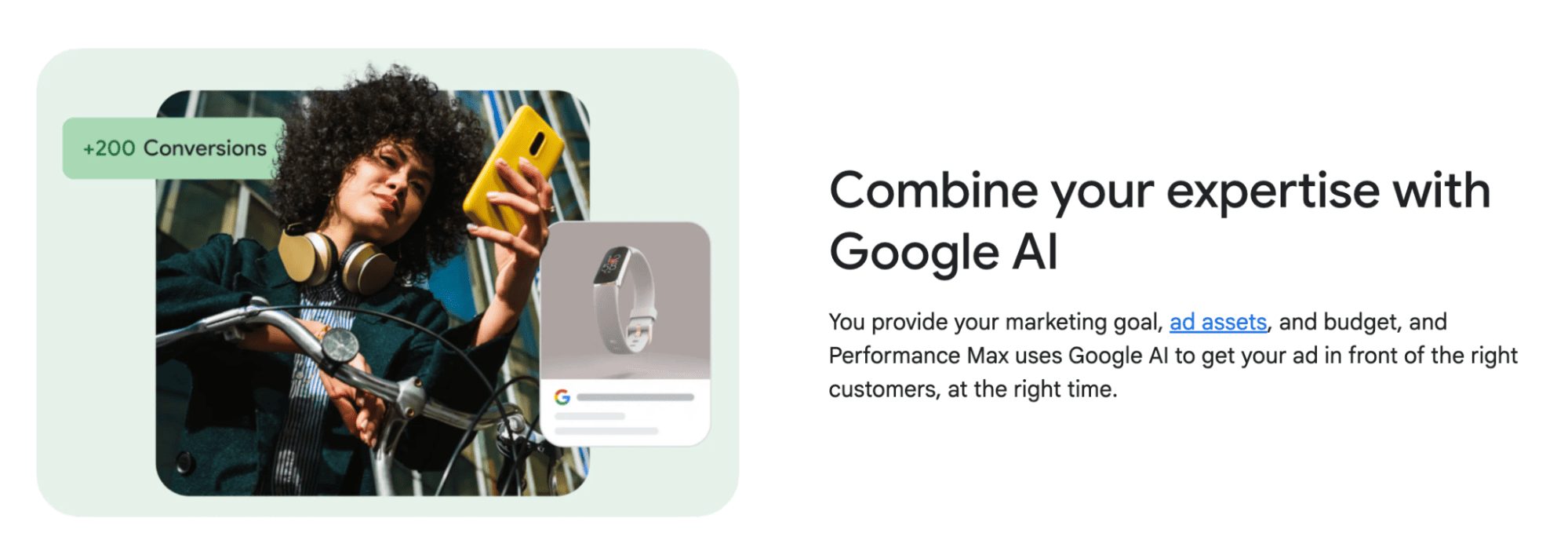
The main idea is scale before complexity. Big Tech prioritizes AI adoption by building systems that can grow and improve gradually rather than expensive, custom tools. As these models are reused and refined, their value compounds, supporting smarter use of AI without runaway costs.
We know that many advertisers face tight budgets and a mix of marketing tools. A phased approach to AI marketing tools helps manage risk. We recommend starting with the AI capabilities already built into your existing advertising and analytics stack, then expanding as results become clear. Many platforms now offer automation and predictive analytics without extra infrastructure.
Without clear measurement, AI investments are hard to justify. Big Tech validates impact through testing and benchmarks. So, you should link AI initiatives directly to efficiency gains, higher conversion rates, and other measurable outcomes.
As artificial intelligence plays a bigger role in advertising, ethical AI has become essential for maintaining trust, fairness, and long‑term performance as AI marketing systems scale across modern digital marketing environments.
Big Tech platforms build ethics into their AI systems through regular bias testing, ongoing audits, and clear accountability frameworks. Their machine learning models are continuously monitored to reduce bias and support fairer ad delivery across diverse audiences, helping protect both users and brands.
For example, Meta’s Variance Reduction System is designed to reduce bias in sensitive ad categories like housing and employment. We like that it continually evaluates how ads are delivered to ensure outcomes match intended audiences. More importantly, it balances fairness with performance at scale using advanced AI tools.
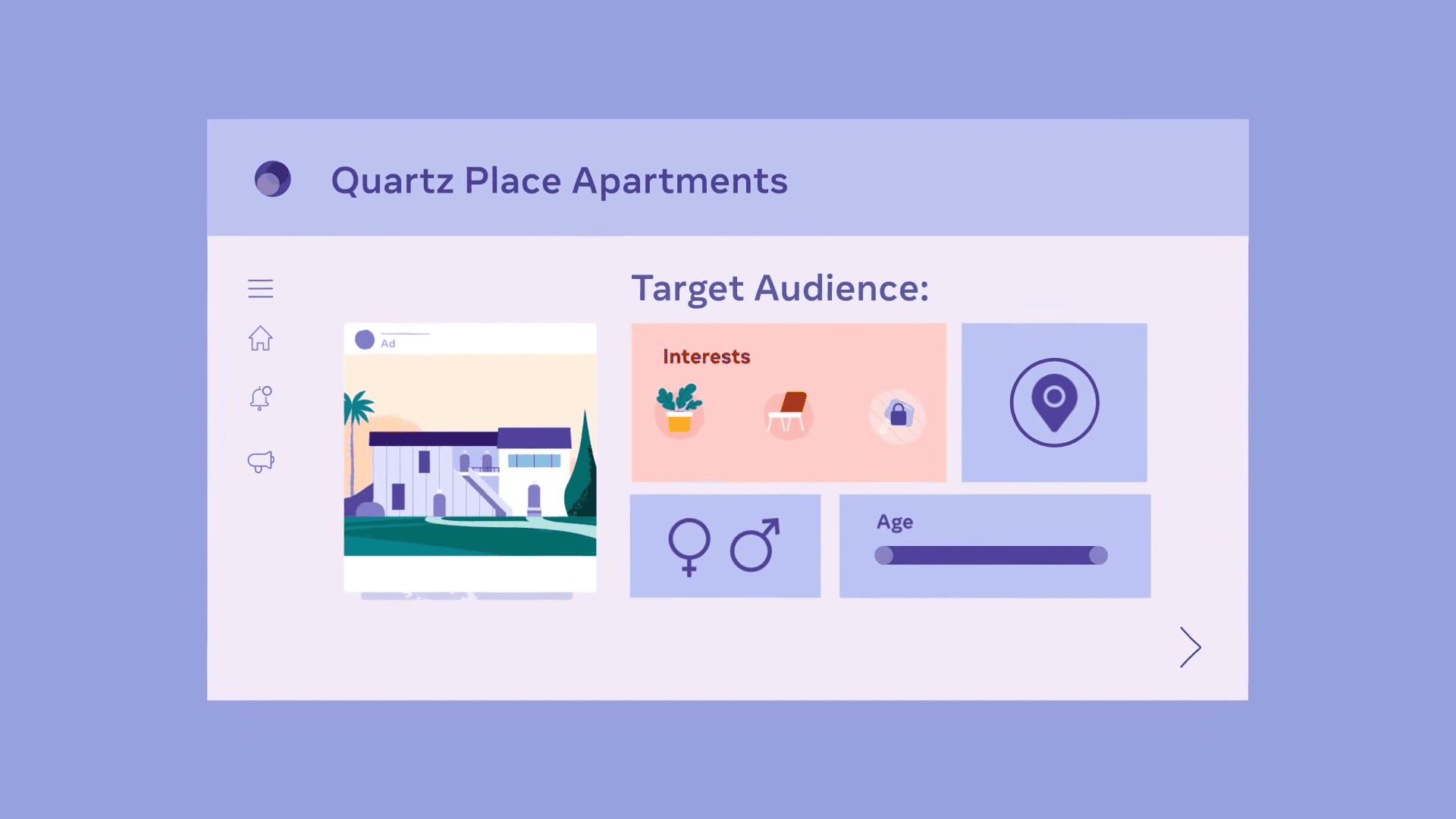
The guiding idea is governance before scale. Big Tech knows that unchecked automation can amplify bias and produce unintended outcomes. Clear standards, defined ownership, and proactive oversight help keep AI aligned with ethical expectations while still supporting business goals.
You can follow a similar path by setting internal guidelines for AI‑driven decisions. Define which data sources are acceptable, review automated targeting logic, and ensure AI‑generated content fits with your brand values and brand voice. In our experience, transparency becomes especially important when AI shapes the customer experience at scale.
If AI systems are hard to explain, regulatory and reputational risks grow. If your teams can’t explain how decisions are made, trust can break down quickly. Ethical AI isn’t just about compliance. It’s a strategic safeguard that protects credibility and supports sustainable growth.
Before rolling out artificial intelligence systems at scale, Big Tech relies heavily on controlled experimentation. Pilot projects help teams validate ideas, manage risk, and learn quickly without disrupting active marketing campaigns or overall performance.
Big Tech platforms introduce new AI systems through pilots, A/B tests, and limited rollouts before expanding them across products or markets. These pilots expose models to small traffic segments, specific ad formats, or focused use cases. This makes it easier to evaluate the impact on performance, stability, and customer behaviors.
For example, Google Ads uses Experiments to test AI‑driven changes on controlled audience segments or ad formats. This approach helps teams measure effectiveness and system reliability before broad deployment. We think that’s great to reduce uncertainty around AI adoption.
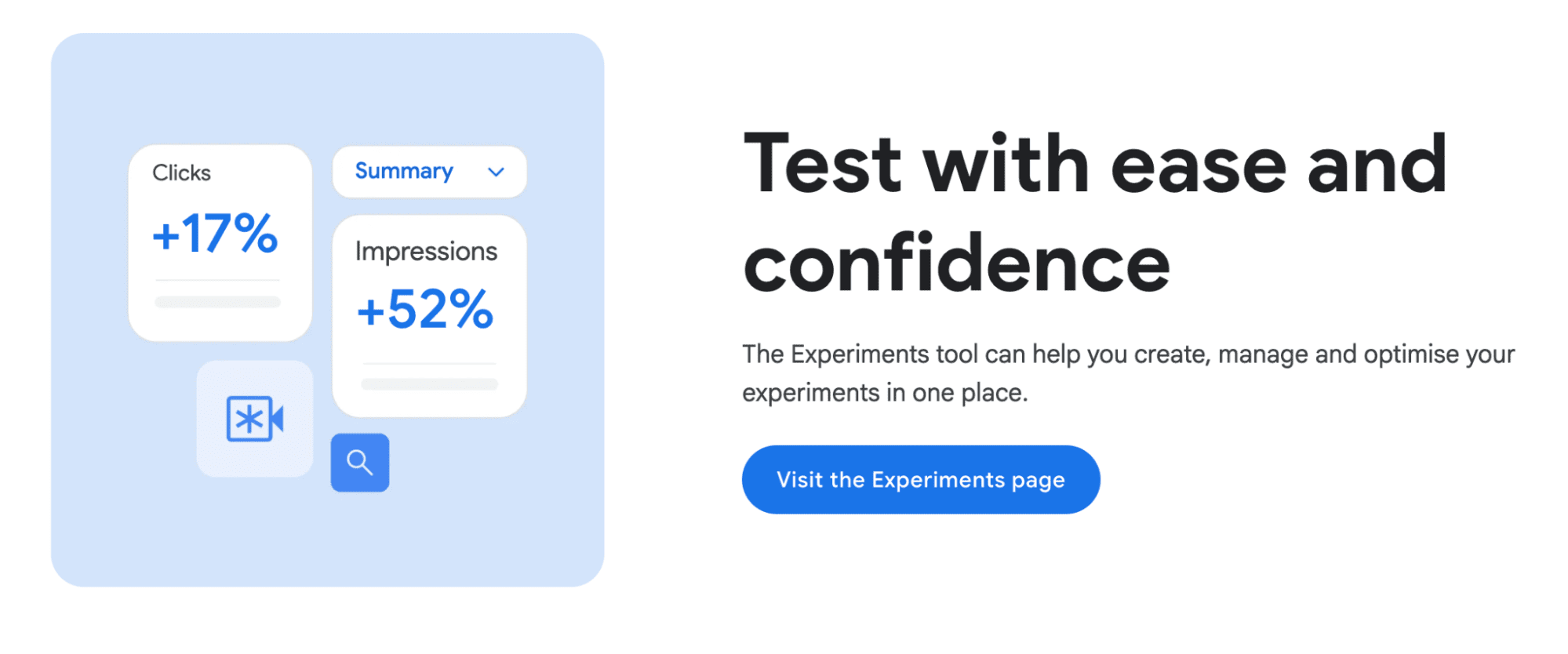
This is all about learning before scaling. Pilot projects reduce risk by isolating variables and generating evidence in a controlled environment. Rather than committing to a full launch upfront, Big Tech treats AI development as a cycle of testing, feedback, and iteration based on real data.
You can leverage the same strategy by running focused AI pilots within defined boundaries. Start with one campaign, channel, or target audience, and set clear success criteria tied to efficiency, performance, or customer experience. We advise you to test AI marketing tools in lower‑risk scenarios to build confidence before wider rollout.
Pilot projects fall short when goals are unclear or when results aren’t reviewed properly. We advise you to prioritize fast learning over quick wins. Also, use these accumulated insights to decide what should scale, what needs tuning, and what should be paused.
Pro tip: Automation works best when creative testing is built into the experimentation process. Tools like our free ad mockup generators help teams quickly visualize, test, and iterate ad concepts during pilot phases. That way, it’s easier to test variations, see how your potential customers respond, and iterate before scaling automated media buying.
Even the most advanced AI marketing systems don’t eliminate the need for people. Big Tech uses automation tools to execute at scale, but human teams still steer strategy, priorities, and decisions across all marketing efforts.
Big Tech applies a “human-in-the-loop” model. Artificial intelligence handles real-time bidding, placement, and optimization through machine learning, while humans set campaign goals, define boundaries, and decide what success looks like. AI can process massive volumes of behavioral data in seconds, but strategic control remains human.
Take Meta’s Advantage+ campaigns. These are built for scale using AI tools, yet they let advertisers define intent, limits, and performance goals. This ensures the tech aligns with broader marketing strategies and outcomes.
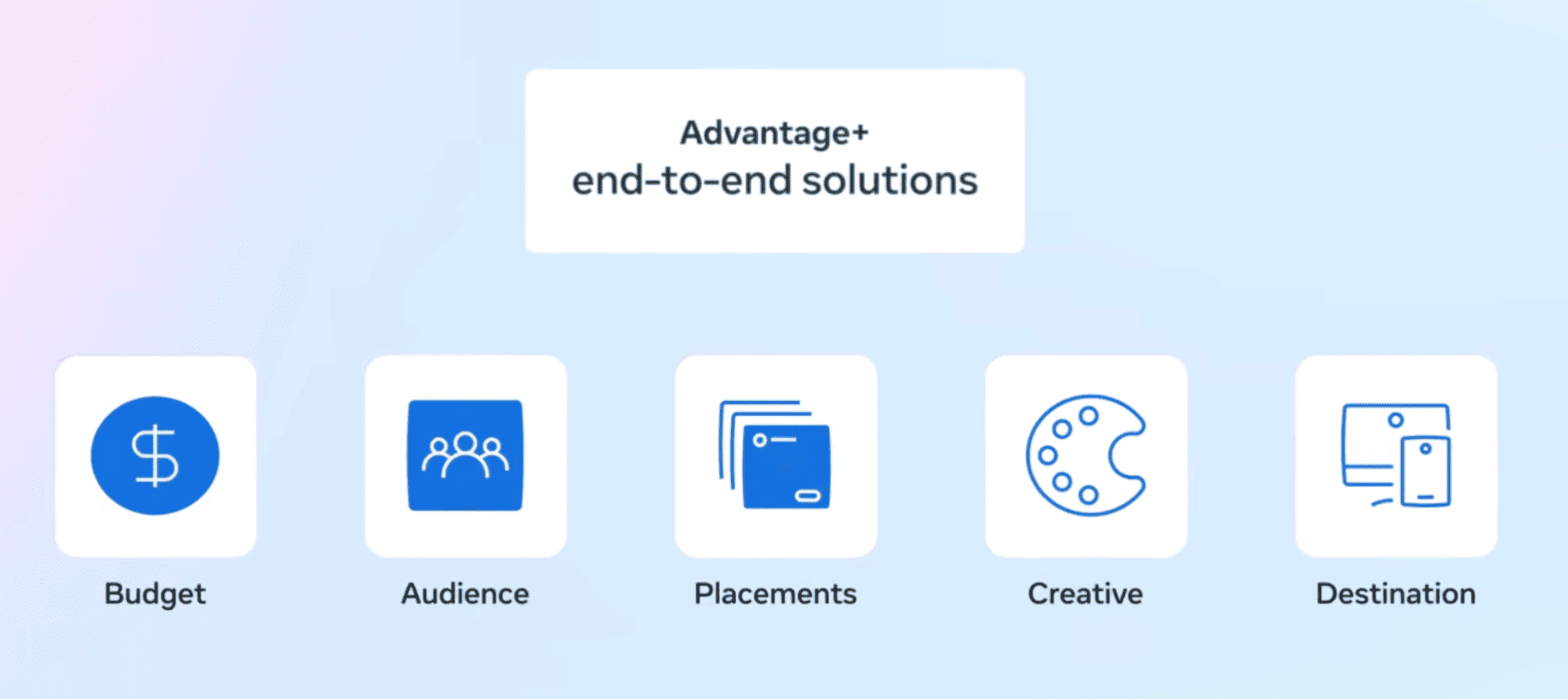
The principle here is collaboration. We all know that AI is unmatched at speed, scale, and spotting patterns. Humans bring context, creativity, ethics, and judgment. Big Tech creates systems where AI tools enhance human decisions rather than take over entirely.
You can let AI handle repetitive execution, like bidding and placement, so you can focus on strategic planning, creative direction, and maintaining a consistent brand voice. We encourage this balance in our own teams because it leads to better marketing content, a stronger customer experience, and more actionable insights.
Too much automation without oversight can lead to disconnected messaging or culturally tone-deaf content. We discovered that, even if it’s performing better than ever, AI still lacks the nuance and empathy people provide. The best results come when AI drives efficiency and scale, and humans lead the way with judgment and intent.
One reason Big Tech’s AI systems get stronger over time is that performance data isn’t treated as a final result. Instead, outcomes are fed back into the models to help inform smarter decisions in the future, supporting continuous optimization across all marketing efforts.
Big Tech platforms run closed‑loop measurement systems that feed signals, like clicks, engagement, and purchases, directly into machine learning models. This real feedback helps refine targeting, creative choices, and ad delivery based on real results. This strengthens your overall AI marketing performance.
Amazon Ads is a clear example. Its models learn from product views, add‑to‑cart actions, and completed purchases. This way, ad delivery can optimize around real sales outcomes and the broader customer experience, not just impressions or reach.
The emphasis here is on learning over reporting. Attribution tells you what happened, but learning shapes what happens next. Artificial intelligence depends on timely, high‑quality feedback to adapt. When signals are late or incomplete, models can stall or drift, weakening performance.
We advise you to build measurement frameworks that prioritize meaningful feedback in your marketing plans. We have experienced the best results when performance data directly informs creative refreshes, bidding strategies, and audience decisions. AI tools are most effective when feedback is consistent and tied to outcomes that matter, like conversion rate and long‑term customer value.
Closed‑loop systems fail when data is scattered, or optimization chases isolated wins. Big Tech’s edge comes from small improvements driven by ongoing learning instead of short‑lived performance spikes.
What sets Big Tech apart isn’t about access to AI tools but the way those tools are applied with discipline and consistency. The real advantage lies in balancing automation with human oversight, performance with ethics, and scale with transparency across evolving digital marketing ecosystems.
Most marketers may not match Big Tech’s scale, but the principles behind its success still apply. Smart, responsible AI marketing starts with clarity: define goals, set boundaries, and build feedback loops that turn performance data into actionable insights.
When artificial intelligence is guided by strategy instead of hype, it becomes a powerful force for better decisions, better customer experience, and long-term business growth.
At inBeat, we help brands turn these Big Tech AI lessons into practical, scalable marketing systems.
Through inBeat Agency, we support strategy, content generation, and optimization across AI-driven campaigns. And with the inBeat.co toolkit, teams can access calculators and creative tools that make testing, forecasting, and iteration easier day to day.
If you’re looking to put these ideas into practice, get in touch today! We’ll show you exactly how we help brands apply AI strategically to boost performance and make a lasting impact.
Big Tech uses AI and machine learning to take care of the heavy lifting in advertising, things like targeting, bidding, creative selection, and real-time optimization. These systems learn from performance data as campaigns run, adjusting faster to improve results. Over time, this leads to stronger audience engagement, smoother cross-channel engagement, and even smarter decisions around things like dynamic pricing, all without constant manual intervention.
Modern digital advertising relies on a mix of predictive analytics, natural language processing, and generative AI tools. These technologies support content optimization, improve targeting accuracy, and help teams produce higher-quality AI-generated content at scale. As platforms evolve, emerging tools like Google Bard and other generative models are also influencing how marketers research, ideate, and adapt content to shifting future trends in digital marketing.
Yes. You don’t need Big Tech scale to benefit from these principles. Smaller teams can start with built‑in AI tools in existing ad platforms, run focused tests, and emphasize learning over perfection. This gradual approach supports better decisions in marketing efforts and smooth AI adoption without taking on too much risk.
The biggest risks include a lack of transparency, biased outcomes, and leaning too heavily on automation without oversight. These can be managed with clear governance, ongoing human review, and regular checkpoints that assess how AI decisions affect customer experience and long‑term performance. When guided carefully, AI strengthens strategy instead of becoming a blind spot.