Important tool updates - Learn more
- Learn
-
Articles
Read about influencer marketing
-
Growthnotes - Newsletter
Insights for the modern marketer
Instagram is no longer just where brands show up. It’s where they sell. What started as a simple image feed has become a full-blown conversion engine.
With over 2 billion people using the platform every month in 2024, and half of them engaging with brand accounts, Instagram marketing is now one of the biggest drivers of brand growth, product discovery, and straight-up sales.
AI‑powered content tools are now the norm. Brands are using smart platforms to auto‑edit videos, schedule posts, and tailor content for specific segments. At the same time, Instagram’s shopping features and conversion layers mean people are actively stepping into buying journeys straight from their feed.
Meanwhile, analytics, social listening, and UGC (user‑generated content) programs let brands build measurable ROI and genuine loyalty.
The best Instagram marketing services will put all that to work in your favor.
Here’s what we’ll walk you through in this guide:
Think of Instagram marketing as a long‑term investment in your brand’s visibility and loyalty.
When done well, your Instagram presence becomes a powerful asset, fuelling brand awareness, community, and conversions month after month.
Pro Tip: Need a hand from the pros? Take a look at our curated list of the Best Instagram Marketing Agencies, perfect for finding a partner that actually gets your brand.
Instagram marketing services help brands grow their audience, engagement, and sales through a structured mix of content creation, paid ads, and analytics.
In simple terms, they turn your Instagram presence into a measurable growth engine. Agencies or in-house teams typically handle:
Strong providers connect every Reel, Story, and ad to your brand’s broader marketing funnel, from awareness to conversion.
When you’re evaluating Instagram marketing services, ask your provider:
This shifts the discussion from “we'll run your Instagram” to “we’ll run your Instagram as part of your growth funnel”.
Pro tip: Want to compare your metrics across campaigns and see if you’ve met your goals? Our free marketing calculators help you get there.
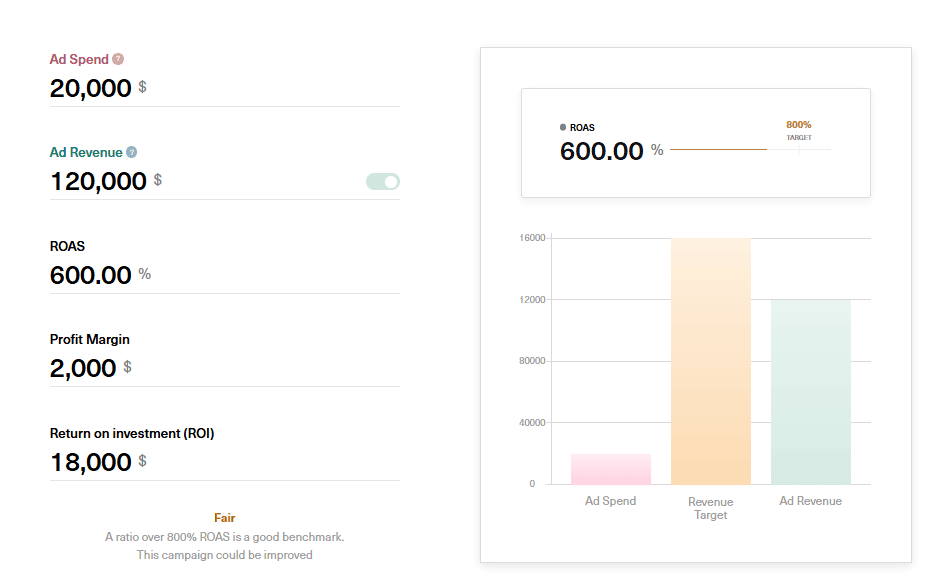
For example, our free ROAS calculator shows you a clear ROI and ROAS. You also get solid benchmarks, so you know if your campaign needs improving.
Instagram marketing services typically fall into three main categories: organic, paid, and influencer‑focused. Each supports a different stage of audience growth and conversion.
These services focus on long‑term community growth, brand consistency, and engagement. You’ll see offerings like content strategy, profile optimization, user‑generated content programs, and development of regular content calendars.
So, why do you need an expert handling these services? Because the numbers are not so great.
One benchmark puts the average engagement rate for business accounts at 2.18% per post.
Because of these low reach levels, organic services need to lean hard on engaging formats (Reels, Stories, carousels) and community activation.
Below are the core sub‑areas of organic Instagram marketing services:
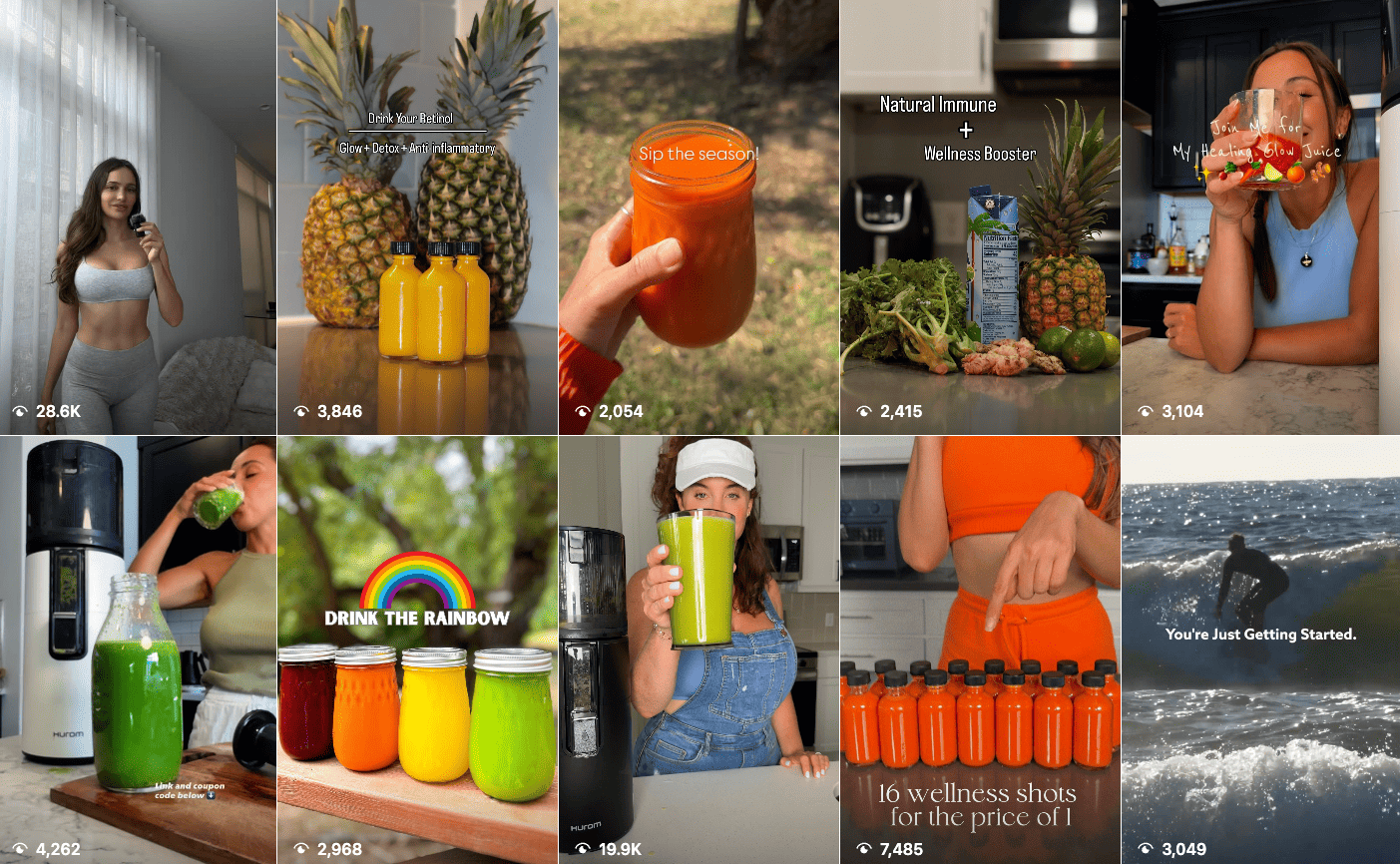
Short‑form video dominates Instagram. In 2025, Instagram Reels delivered around 22 % more interaction than standard video posts.
Implementation steps:
Hurom, our sister agency’s client, does this very well.
Insider tip: Repurpose a high‑engagement static post by turning it into a Reel. Add movement, audio, and captions to drive discovery.
Instagram profiles are the entry point into a brand’s Instagram ecosystem.
Key optimization steps:
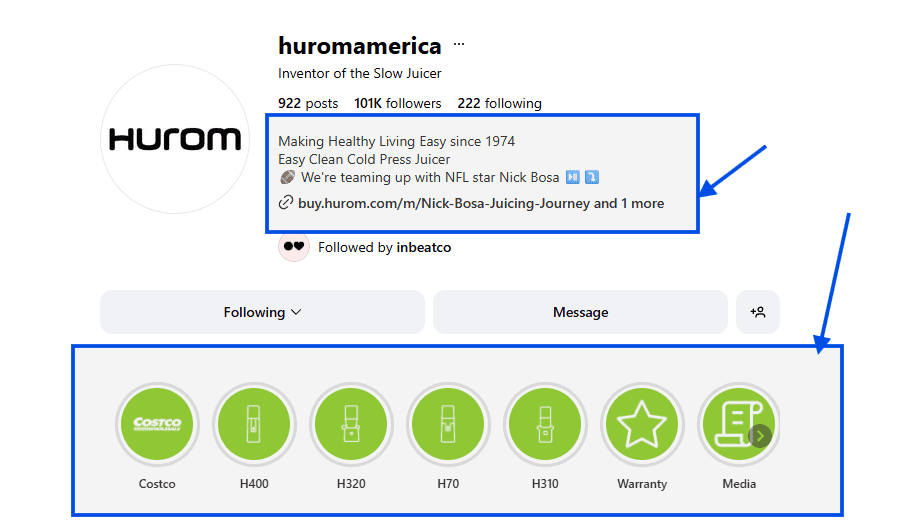
Let’s look at Hurom again. First, the optimized description follows specific keywords they’re planning to rank for. Besides, they feature separate products and info below that, so people can easily access everything:
Insider tip: When selecting a provider, ask whether they offer discoverability audits and profile SEO optimization.
Hashtags remain relevant, but their role has shifted to semantic and niche grouping.
Best practices:
Insider tip: When working with a provider, ask about their hashtag library strategy and refresh cadence.
While Reels are key for discovery, static and carousel posts still play vital roles for brand narrative, evergreen content, and community building.
Here’s a good carousel example:
A strong content calendar makes organic services scalable and consistent across your social platforms:
Insider tip: Build a “top content repeat” bucket. Repurpose or refresh your best-performing posts every 8-12 weeks with new visuals/audio.
User-generated content is one of the most powerful organic strategies for trust, loyalty, and community expansion. In fact, 90% of consumers say they trust UGC more than traditional advertising.
That’s why our sister-agency inBeat creates content like this, helping brands triple their ROAS in some cases:
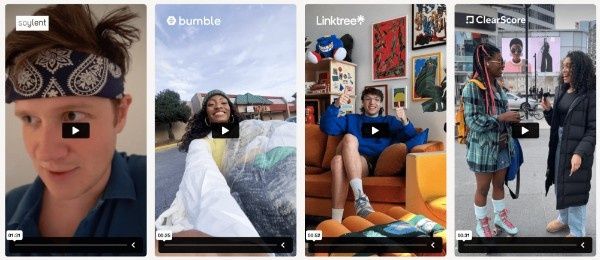
Best practices:
Paid Instagram marketing services use targeted distribution to reach new audiences and accelerate measurable ROI.
They may include managing Instagram Ads (Story Ads, Collection Ads, dynamic product ads), targeting and budget optimization, and linking campaigns into your broader funnel.
For brands focused on ROI, paid campaigns let you track CPC, CPA, ROAS, and other revenue‑linked outcomes.
Getting the format right makes all the difference, and the best agencies know that. Here are the top options for 2026:
Pro tip: Our Instagram ad mockup generator helps you make and test different creatives fast to see which performs best. Plus, it’s free and really easy to use. You just have to fill in the tabs like so:
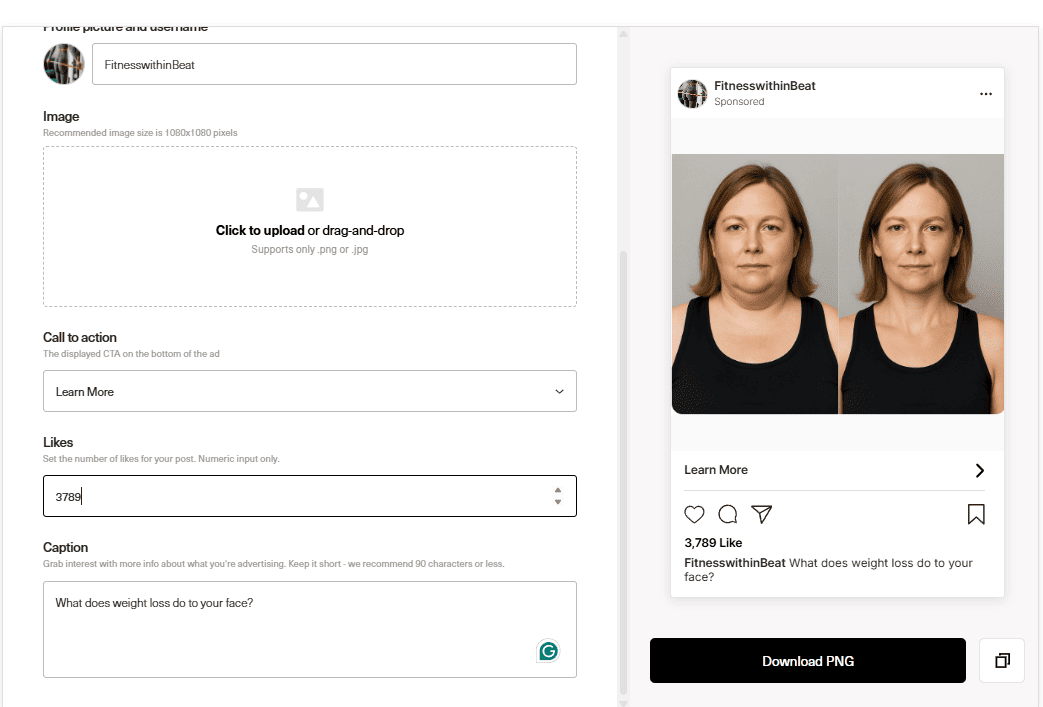
Modern paid services optimize ads and sometimes even use AI tools for the job:
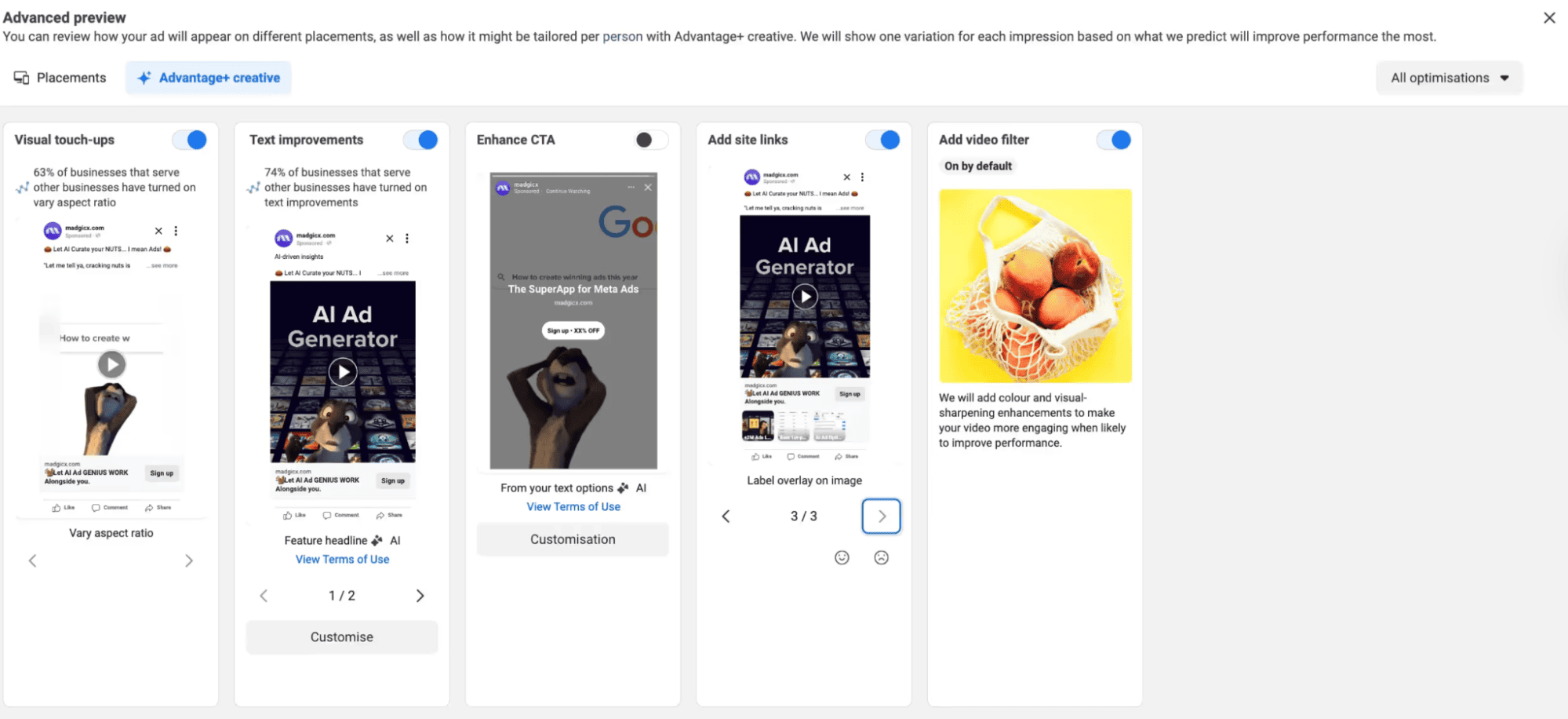
Paid Instagram services should follow an iterative loop:
Paid Instagram services must tie ad spend back to real business outcomes:
Pro tip: This free CPA calculator helps you compare CPAs across multiple campaigns. Here’s how easy it is to use it:
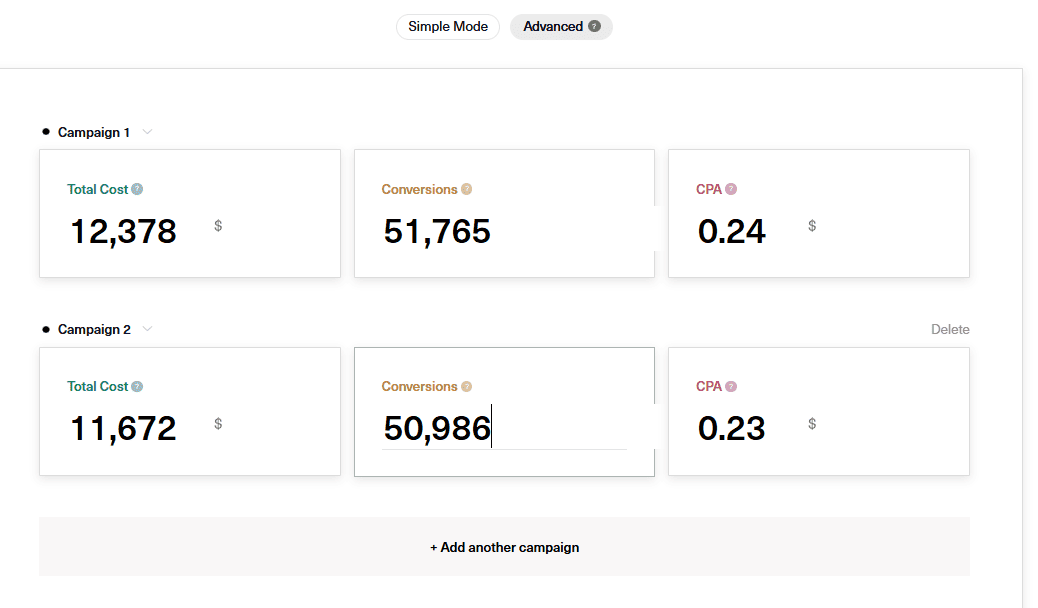
These services build reach and credibility through strategic partnerships and authentic content creation.
Influencer marketing on Instagram has come a long way. The game has shifted toward long-term partnerships that build real trust and consistency, exactly what audiences want in a world flooded with content.
Instead of obsessing over follower counts, brands are now teaming up with micro- and nano-influencers with tight-knit, super-engaged communities. These smaller creators bring way more authenticity and connection to the table, helping brands feel more human and relatable.
Thanks to AI-powered matching tools, finding the right influencer has become more data-driven. These platforms look beyond numbers and dig into things like audience vibe, content style, and how well the creator actually fits your brand. The result? Collabs that feel natural and way more effective.
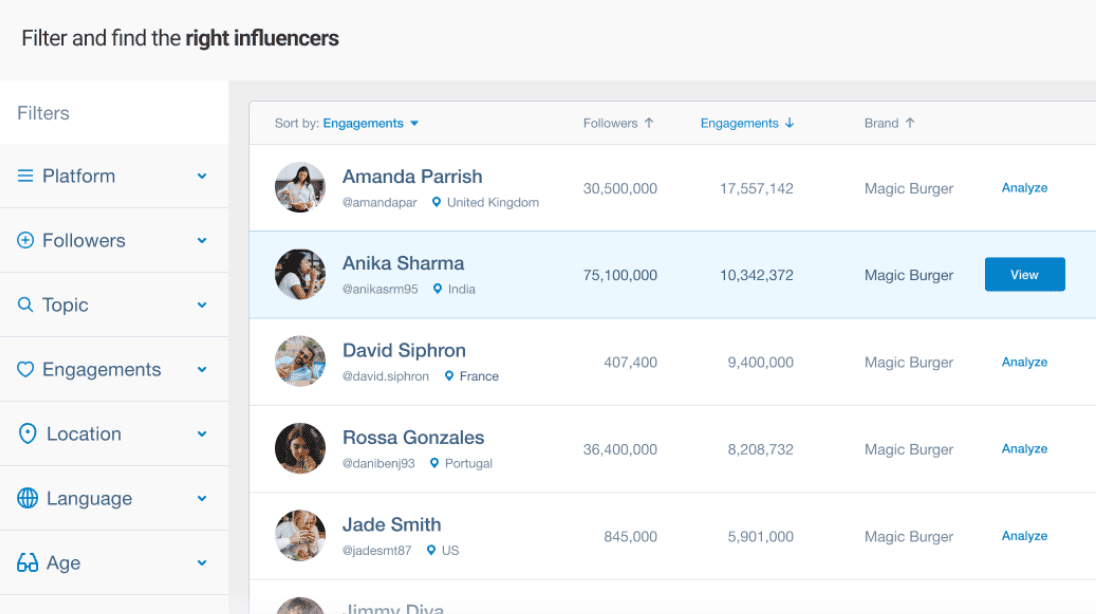
Running a good influencer campaign today means looking beyond the basics. Tools like Brandwatch, Sendible, and Meta Business Suite now track typical variables (likes and comments), but also how people actually feel about your content.
With AI-driven sentiment analysis, you can understand the tone, emotion, and intent behind what people are saying. That results in smarter decisions, more meaningful insights, and campaigns that connect on an emotional level.
Instagram’s algorithm never sleeps, so you need good Instagram marketing services to track these trends.
To stay ahead, marketers use forecasting tools like TrendTok and Meta Creative Forecast to spot rising audio tracks, formats, and cultural shifts before they blow up.
It’s all about blending data with creativity. The best influencer campaigns in 2026 should hit that sweet spot: they’re timely, feel totally on-brand, and tap into what audiences care about right now.
Here’s a breakdown of typical costs for Instagram marketing in 2026, across four key service areas: organic, paid, influencer, and white-label/ reporting. These figures are based on recent benchmark data and serve as a guide; however, actual costs will vary depending on the scope, region, industry, and agency.
What this includes: Content creation (posts, Reels, Stories), community management (comments, DMs), audience growth (non-paid), and regular reporting.
Typical cost ranges:
Key factors: Number of posts per month, inclusion of video/Reels, community engagement intensity, number of platforms, volume of content creation.
What this includes: Budget for ad spend + agency or platform management fees (ad creation, optimization, reporting).
Typical cost benchmarks:
What to budget:
Key influencing factors: Audience targeting (niche vs broad), bidding strategy, creative quality, seasonality, ad placement (Feed, Reels, Stories).
What this includes: Paying creators (nano, micro, macro, celebrity) to promote your brand via feed posts, Stories, Reels, etc.
Typical cost benchmarks according to Shopify:Benchmark: US$100 per 10,000 followers for an Instagram post (basic rate).
According to our internal data:
Key influencing factors: size of influencer’s audience, engagement rate, niche relevance, content rights (usage beyond a post), exclusivity, and number of posts.
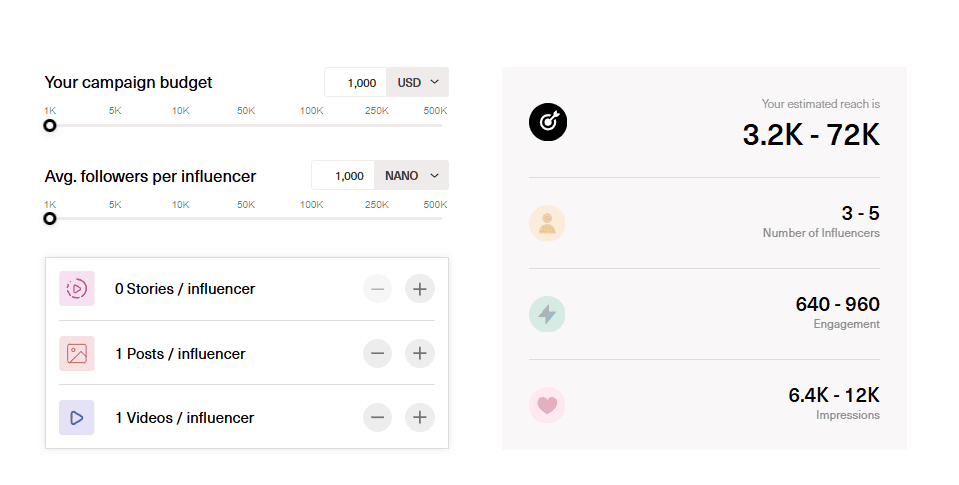
Pro tip: If you want to compare influencer costs across creators and formats, use this free influencer marketing ROI calculator. It shows you the estimated reach, impressions, and engagement so you can pick the right influencers for your campaign goals.
What this includes: Branded (your agency’s brand) dashboards, reports, and client portals that compile performance data across Instagram and possibly other channels.
Typical cost benchmarks:
Additional cost considerations: Setup time, design and branding work, data integration (Instagram Insights, Meta Ads, Analytics), and ongoing report automation.
For companies investing in Instagram marketing services, the focus in 2026 must shift to real business outcomes like revenue, growth, efficiency, and brand loyalty lift.
To understand how Instagram marketing services actually move the needle for your business, you need to connect the dots between campaign activity and real growth. The table below breaks down the key metrics to watch and what they really tell you:
| Metric | What It Measures | How to Track or Apply It |
|---|---|---|
| Revenue / Leads Generated | Sales, sign-ups, or installs directly driven by Instagram campaigns | Use tracking tools such as UTM tags and pixels to attribute conversions accurately |
| Cost vs Return (ROI %) | Financial efficiency of Instagram marketing spend | Apply the formula (Revenue − Cost) ÷ Cost × 100 = ROI% to benchmark performance and compare services |
| Efficiency Metrics | Cost-effectiveness and long-term value of campaigns | Monitor CPA (cost per acquisition), CPC (cost per click), ROAS (return on ad spend), and LTV (lifetime value). A year-on-year drop in CPA signals improved targeting or content |
| Soft Metrics → Hard Outcomes | The link between engagement and conversion | Track saves, shares, and comments. These build awareness and community that eventually drive conversions |
| Long-Term Brand Loyalty & Value | Growth of brand equity and repeat purchase behavior | View Instagram marketing as an asset: consistent investment strengthens brand presence, loyalty, and retention over time |
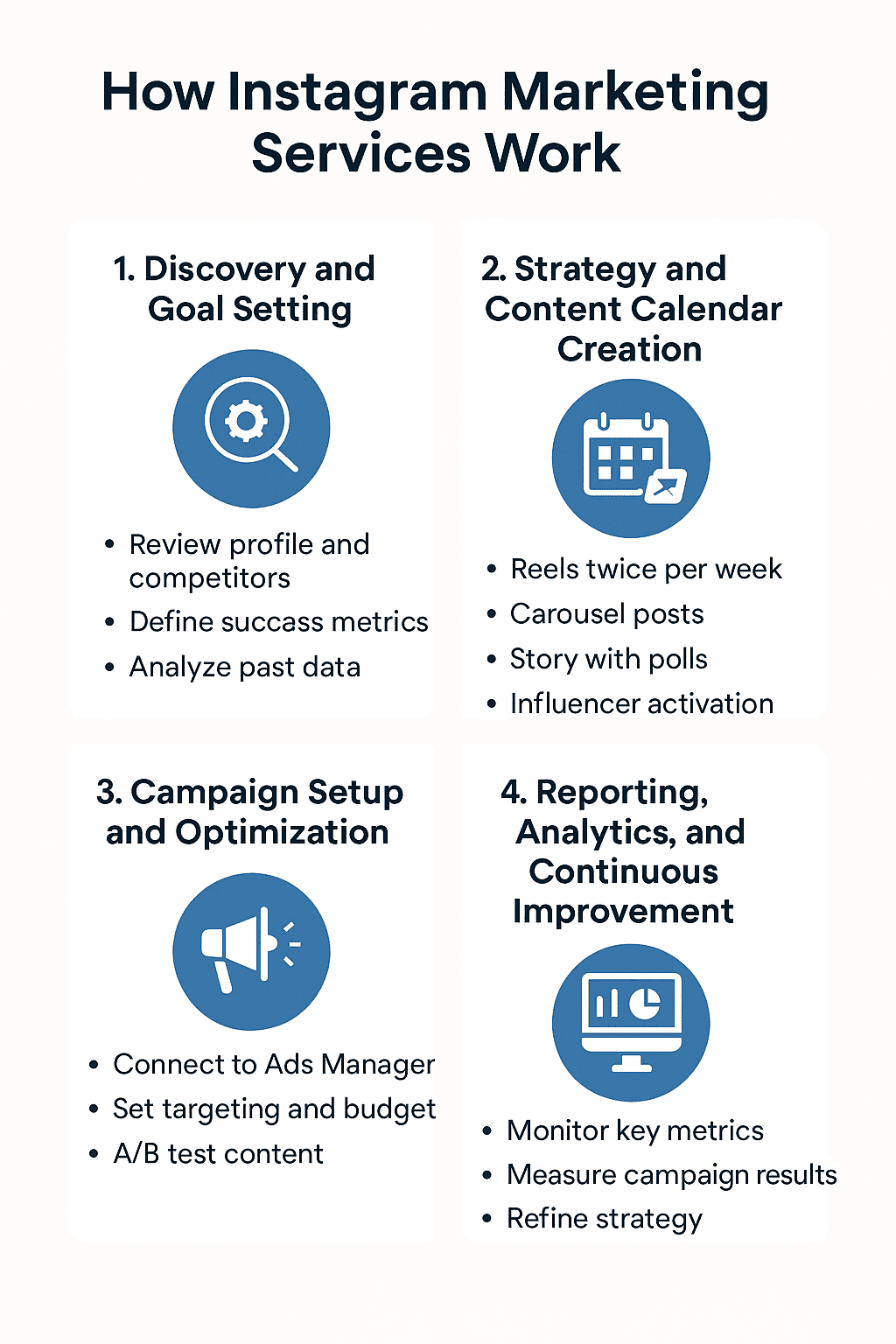
Professional Instagram marketing services follow a structured, data-driven process designed to connect your brand goals with measurable results. Here’s how the full journey unfolds, from discovery to continuous optimization.
Every great Instagram strategy starts with clear goals. Whether you want to boost brand awareness, drive more sales through Instagram Shopping, grow a loyal community, or simply improve engagement, getting specific from the start makes all the difference.
At this stage, your Instagram marketing partner will:
They’ll also use tools like Meta Business Suite and Instagram Insights to dig into your past data, helping set smart, achievable targets that actually align with your growth goals.
With your goals locked in, it’s time to build a strategy that works across the full Instagram funnel. Think everything from organic content to paid ads and influencer collaborations. This is where your content mix comes to life.
A well-rounded content calendar might include:
Once your strategy is ready, it’s time to launch. Your service provider will connect your Instagram Business Account to Meta Ads Manager and build out your ad units.
From there, targeting and budgets are fine-tuned using smart, AI‑powered tools that help you get more bang for your buck.
Then comes the ongoing optimization. A/B testing different visuals, captions, formats (like Reels versus Stories), and placements helps you learn what actually moves the needle.
Remember: Instagram’s algorithm favours saves, shares, and DMs, not just likes anymore, so your content needs to start conversations.
Once your campaigns are live, the focus shifts to analysis and optimization. A top‑tier agency will provide clear, easy‑to‑read dashboards that cover both big‑picture and business‑critical metrics. Think engagement rate, conversion rate, ROAS, CPA, and audience growth.
Tools like Sendible, Brandwatch, and Meta Business Suite are used for real‑time monitoring of brand mentions, sentiment, UGC impact, and influencer performance. What you learn here feeds back into your strategy. It reveals which content formats (Reels, carousels, Stories) are worth repeating, and which deserve a rethink.
Insider tip: A truly data‑driven approach is essential for measuring and sustaining social success. The best Instagram marketing services treat your presence as a living system that must be continually optimized to build awareness, loyalty, and conversions over time.
When planning your Instagram strategy for 2026, one big decision is whether to keep things in‑house or partner with a specialized agency. Each route impacts how much control you have, how fast you can pivot, what tools you use, and how well you keep up with Instagram’s shifting algorithm and content trends.
If you’re thinking about running your Instagram marketing in-house, it helps to look at both sides first. Here’s a quick snapshot of the pros and cons of managing things internally.
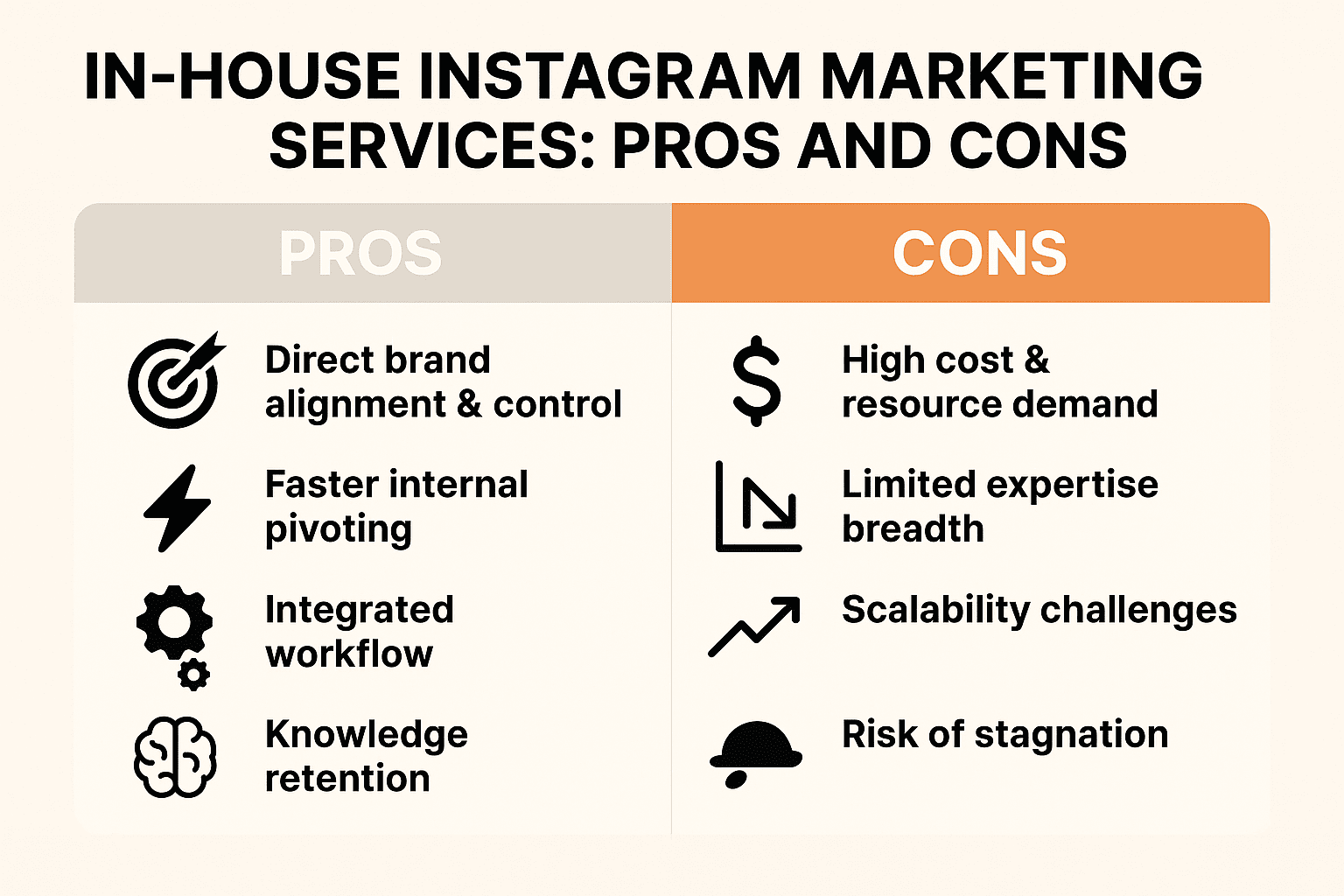
Pros:
Cons:
If you’re considering outsourcing your Instagram marketing, it’s smart to look at both sides before making a move. Here’s a quick breakdown of the pros and cons of working with an external agency.
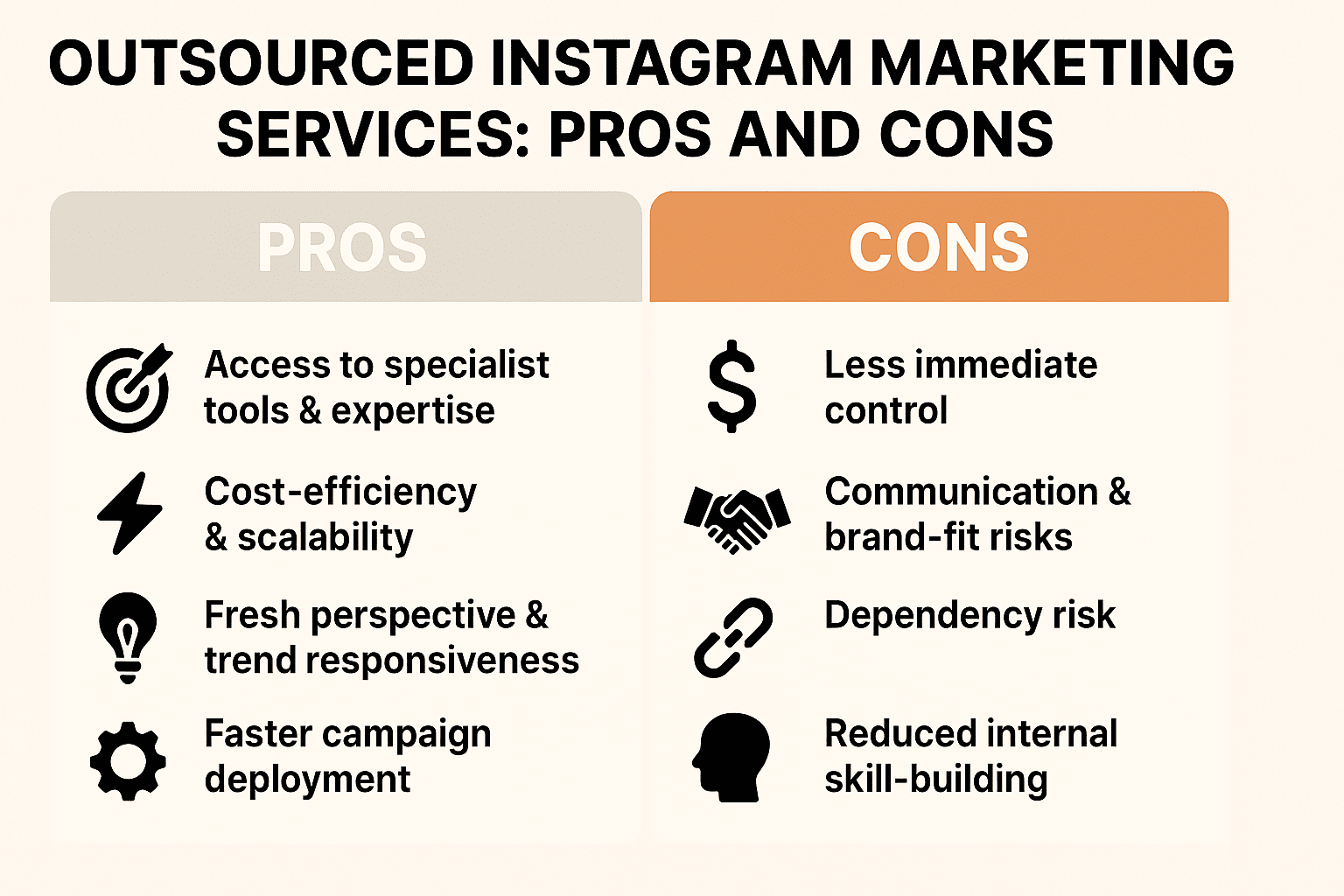
Pros:
Cons:
When comparing models, factor in how Instagram itself is changing:
Choosing the right agency to handle your Instagram marketing is one of the most important moves you’ll make in your social media strategy. In 2026, Instagram is a powerful conversion engine, thanks to influencer partnerships, direct DMs, and shoppable ads.
That means your Instagram agency needs to do more than post content. They should understand your business goals, turn engagement into measurable growth, and align every campaign with your bigger picture.
Not all Instagram marketing agencies are created equal. Before signing a contract, here’s what to look for to make sure your partner can actually drive the outcomes you need.
Clear alignment with your business goals
A great agency starts with your objectives, not their pre-set packages. They should ask about your business outcomes (e.g., Instagram-referred revenue, engagement quality, UGC growth) and build a strategy around those. Defining what success looks like before outreach is essential.
Proven Instagram expertise
Choose an agency with a track record in Instagram-specific campaigns, not just generic social media management. Confirm experience across organic, paid, and influencer executions.
Strong tools, analytics & reporting
Ask what analytics tools they use, e.g., Meta Business Suite, Brandwatch, Sendible, and how they link performance metrics to business outcomes. True data-driven agencies deliver measurable results with sophisticated analysis.
Transparent pricing and deliverables
Every cost should be clear, including content creation, ad spend, influencer fees, and analytics reports. Avoid vague “social media packages” without defined outputs.
Communication and cultural fit
The right agency should feel like part of your internal team. They should understand your brand voice, adapt to your workflow, and treat your Instagram business account as part of your growth engine.
A strong agency partnership can elevate your brand, but the wrong one can waste time and budget. Here are some red flags to be aware of before signing on.
Want to see what effective Instagram marketing looks like in action? These case studies show how brands have grown their presence and performance with the help of inBeat, an expert Instagram marketing agency.
This sustainable food brand sought to increase awareness and engagement on social platforms and position itself strongly in the market.
inBeat worked with Bluehouse Salmon to generate high-volume influencer- and creator-led content (especially food + recipe-centric), to accelerate follower growth and engagement on Instagram.
The campaign drove 1900% follower growth for Bluehouse Salmon.

This premium juicer/health-lifestyle brand faced rising marketing costs, creative fatigue, low ROAS, and over-dependence on discount-driven messaging.
inBeat deployed a mix of macro- and micro-influencers across Instagram (and YouTube) with creator-led content that emphasised product benefits and trust-building rather than pure discounting.
They also used solid tracking (custom URLs, codes) to tie Instagram-driven influencer performance to sales.
As such, they achieved a 2.5 × increase in ROAS (return on ad spend) and reduced CAC (customer acquisition cost) by 36%.

As you’ve worked through this guide, you’ll see that Instagram is a full‑on growth engine. With the right Instagram marketing services, your brand can achieve real, measurable results in 2026: stronger community engagement, direct conversions, and long‑term loyalty.
When it comes to Instagram marketing, your success hinges on choosing partners who understand the platform’s nuances and keep up with the evolving Instagram algorithm.
At inBeat, we help growth‑minded brands activate full‑funnel Instagram strategies:
If you’re ready to stop guessing and start scaling, let’s turn your Instagram into a high‑performance marketing engine.
Scale your brand with inBeat. Contact us today to start building your custom Instagram growth plan for 2026.
It really depends on what you need. Basic Instagram services might start around a few hundred to a few thousand dollars per month, while full-service packages that include content, ads, influencers, and analytics can easily go up to $20,000 or more monthly.
Costs also vary by region and whether you’re hiring an agency, freelancer, or building in-house.
Yes, especially if they focus on driving real business results. A good agency will align with your goals, understand your audience, and help you turn Instagram into a growth channel.
Influencer marketing can give your brand a trusted voice, helping you reach people in a more authentic and relatable way.
To get the most out of it, work with influencers whose audience overlaps with your ideal customer. Then, make their content part of your overall strategy. Track how that content performs in terms of engagement, saves, shares, and ultimately, sales.
You need a smart, focused approach. Start by honing in on a niche audience and speaking directly to them. Use micro-influencers, local hashtags, and content that feels real.
Repurpose your top-performing posts into different formats, like turning a static image into a Reel, to get more mileage. Track what’s working through conversions and engagement, and work with partners who can help you scale while staying true to your brand.